Working Bodies, Feeling Lives
The Spatial-Temporal Regimes and Affective Ruptures of Farmed Animals’ Reproductive Labour
DOI:
https://doi.org/10.52537/humanimalia.28279Keywords:
reproductive labour, animal geographies, animal agriculture, animal affect, spatio-temporal regimes, commodification, multispecies flourishingAbstract
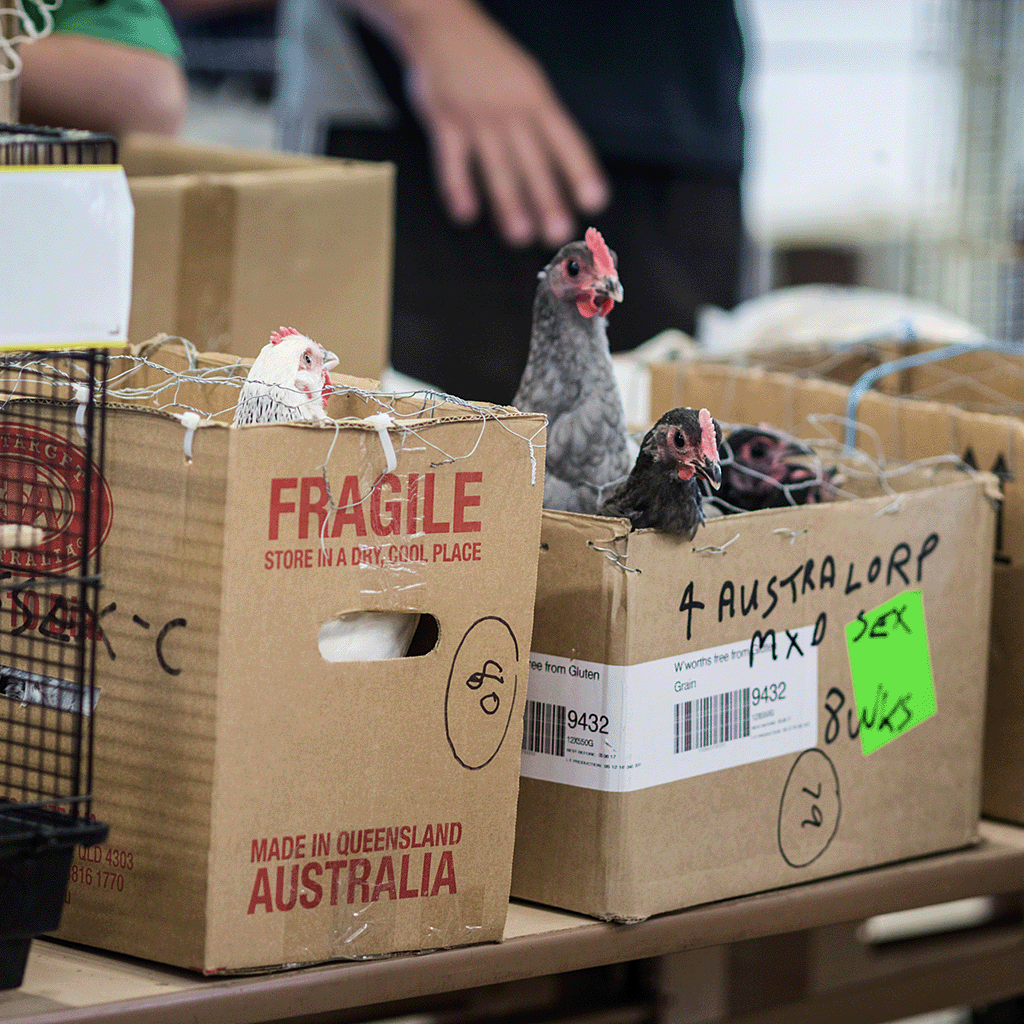
Spatial and temporal regimes of reproductive labour define farmed animals’ lives and experiences and continuously intensify their exploitation, creating an affective infrastructure through which capitalist logics of production operate. Genetic manipulation, gestation, and ovulation become forms of forced labour, operating across scales — from the global organization of animal agriculture industries to the intimate “geographies of the closest in” — the body, uterus, cellular makeup, and animals’ interior lifeworlds. Industrial animal agriculture’s imperative of accelerated time structures this appropriation through carefully managed reproductive cycles, growth rates, and lifespans oriented around maximizing productivity, rendering farmed animals’ “working day” effectively continuous. This article draws on multispecies ethnographic fieldwork with cows raised for beef and chickens commodified for egg production to illustrate how shifting spatial arrangements and temporal pressures produce distinct but interconnected regimes of reproductive control and violence. Cows experience cycles of expanded and contracted spatio-temporality that enable prolonged social bonds, only to rupture them, while chickens endure extreme temporal acceleration and spatial compression that intensify metabolic strain and abstraction. In both cases, reproductive labour generates cumulative affective harms in both the effects on the body and the routine severing of relational connections. Ultimately, this article calls for reimagining multispecies futures grounded in self-determination, relationality, and flourishing beyond commodification.
Downloads
Published
Issue
Section
License
Copyright (c) 2026 Kathryn Gillespie (Author)

This work is licensed under a Creative Commons Attribution 4.0 International License.
How to Cite