Animal Life at the Threshold
On Scales Political, Temporal, Planetary, and Individual
DOI:
https://doi.org/10.52537/humanimalia.28258Keywords:
animal studies, scale, thresholds, Anthropocene, multispecies politics, temporality, planetary thoughtAbstract
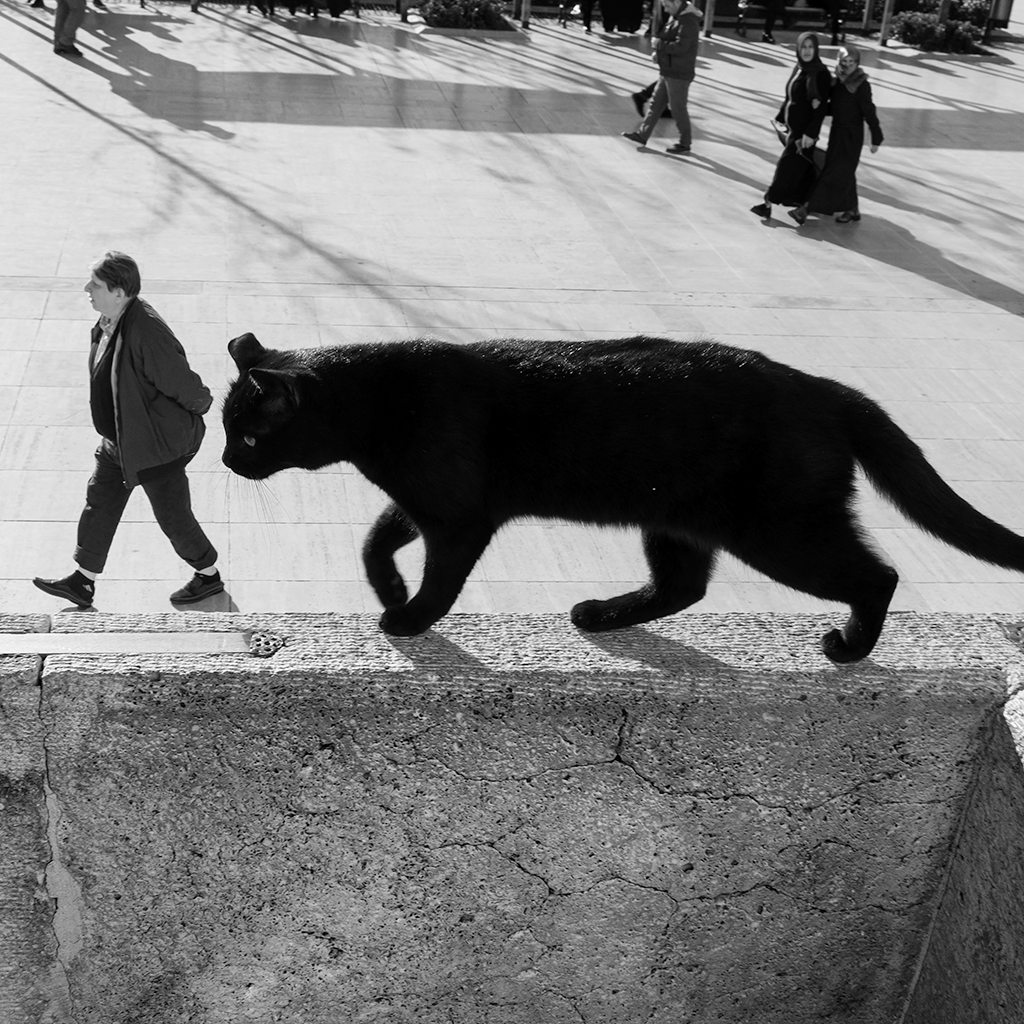
From Aristotle’s scala naturae to the vast scales of animal agriculture, from cognitive scales to moral scales to deathly scales of devaluation, from the world-historical scale of what modernity called “progress” to the “permanent present” to which evolutionary scales condemn animals — in these and countless other ways, animal lives have been and continue to be shaped by different kinds of scales and their positions on them. Yet it is difficult to think about scales without the thresholds they skirt and implicate. In this opening essay, we approach the multiple scales through which animal lives are traversed by probing something of what may be involved in thinking animal life at the threshold. What does it take to cross — or be crossed by — a threshold? What does it mean to create and inhabit a scale? And what is at stake in becoming out-scaled? Articulating pathways through the interventions and conversations that make up this collection on animal scales, and at the same time complicating what we think we know of the politics of scaling, this essay explores how animal lives are made and unmade at the threshold between human mastery of the earth and the planetary upheaval of human ends; at the threshold between human and animal translation and unbridgeability of scale; and at the threshold where scale and perspective connect and disaggregate, giving way to the paradox of “an animal Anthropocene” as a riotous scrambling of scales.
Downloads
References
Baratay, Éric. “Scale: Temporal — Towards a History on the Side of Animals.” Translated by Nick Millet. Humanimalia 16, no. 2 (2026): 87–108. http://doi.org/10.52537/humanimalia.28272.
Barry, Andrew. “Biochemical Scale.” Humanimalia 16, no. 2 (2026): 167–80. http://doi.org/10.52537/humanimalia.28280.
Bennet, Carys E., Richard Thomas, Mark Williams, Jan Zalasiewicz, Matt Edgeworth, Holly Miller, Ben Coles, Alison Foster, Emily J. Burton, and Upenyu Marume. “The Broiler Chicken as a Signal of a Human Reconfigured Biosphere.” Royal Society Open Science 5, no. 12 (2018): 180325. https://doi.org/10.1098/rsos.180325.
Carr, E. Summerson, and Michael Lempert, eds. Scale: Discourse and Dimensions of Social Life. University of California Press, 2016.
Chakrabarty, Dipesh. The Climate of History in a Planetary Age. University of Chicago Press, 2021.
Clark, Timothy. Ecocriticism on the Edge: The Anthropocene as a Threshold Concept. Bloomsbury, 2015.
Coccia, Emanuele. The Life of Plants: A Metaphysics of Mixture. Translated by Dylan J. Montanari. Polity, 2018.
Cochrane, Alasdair. “Interspecies Political Scales and the Question of Legitimacy.” Humanimalia 16, no. 2 (2026): 45–59. http://doi.org/10.52537/humanimalia.28265.
Concha, Astrid, Claire M. Guest, Rob Harris, Thomas W. Pike, Alexandre Feugier, Helen Zulch, and Daniel S. Mills. “Canine Olfactory Thresholds to Amyl Acetate in a Biomedical Detection Scenario.” Frontiers in Veterinary Science 5 (2019): 343. https://doi.org/10.3389/fvets.2018.00345.
Cosgrove, Denis. Apollo’s Eye: A Cartographic Genealogy of the Earth in the Western Imagination. Johns Hopkins University Press, 2003.
Despret, Vinciane. “From Secret Agents to Interagency.” History and Theory 52, no. 4 (2013): 29–44. https://doi.org/10.1111/hith.10686.
Donaldson, Sue and Will Kymlicka. Animals and the Right to Politics. Oxford University Press, 2025.
Gagarin, Yuri. Soviet Man in Space. Foreign Languages Publishing House, 1961.
Gillespie, Kathryn. “Working Bodies, Feeding Lives: The Spatial-Temporal Regimes and Affective Ruptures of Farmed Animals’ Reproductive Labour.” Humanimalia 16, no. 2 (2026): 181–96. http://doi.org/10.52537/humanimalia.28279
Gilroy, Paul. After Empire: Melancholia or Convivial Culture? Routledge, 2004.
Guest, Claire and Cynthia, M. Otto. “Editorial: Canine Olfactory Detection.” Frontiers in Veterinary Science 7 (2020): 100. https://doi.org/10.3389/fvets.2020.00100.
Haraway, Donna. “Situated Knowledges: The Science Question in Feminism and the Privilege of Partial Perspective.” Feminist Studies 14, no. 3 (1988): 575–99. https://doi.org/10.2307/3178066.
Hecht, Gabrielle. “Interscalar Vehicles for an African Anthropocene: On Waste, Temporality, and Violence.” Cultural Anthropology 33, no. 1 (2018): 109–41. https://doi.org/10.14506/ca33.1.05.
Hegel, G. W. F. Lectures on the Philosophy of World History, Volume II: The Lectures of 1830–1831. Edited and translated by Peter C. Hodgson and Robert F. Brown. Oxford University Press, 2025.
Horowitz, Alexandria. Inside of a Dog: What Dogs See, Smell, and Know. Simon and Schuster, 2012.
Horton, Zachary. The Cosmic Zoom: Scale, Knowledge, and Mediation. University of Chicago Press, 2021.
Jazeel, Tariq. “Spatializing Difference beyond Cosmopolitanism: Rethinking Planetary Futures.” Theory, Culture & Society 28, no. 5 (2011): 75–97. https://doi.org/10.1177/0263276411410447.
Lury, Celia. “How Do We Count Ourselves? The New Political Arithmetic of Personalisation.” Keynote lecture at the 9th Nordes Design Research conference, Kolding, Denmark, 17 August 2021.
Motamedi Fraser, Mariam. Dog Politics: Species Stories and the Animal Sciences. Manchester University Press, 2024.
Motamedi Fraser, Mariam. “The Politics of Animal Time: Species, Race, and The Anthropocene.” Environment and Planning E: Nature and Space 8, no. 4 (2025): 1389–1407. https://doi.org/10.1177/25148486251345307.
Page, Sophie. “Actors in Time: Animal Histories, Behavioural Plasticity, and the Medieval Past.” Humanimalia 16, no. 2 (2026): 125–46. http://doi.org/10.52537/humanimalia.28276.
Pick, Anat. “From Eyes Open to Eyes Closed: A Conversation with Andrea Arnold.” Humanimalia 16, no. 2 (2026): 197–213. http://doi.org/10.52537/humanimalia.28281.
Rath, Thomas. “Time, Species and Human–Animal Relations in Latin America.” Humanimalia 16, no. 2 (2026): 109–24. http://doi.org/10.52537/humanimalia.28275.
Savransky, Martin. Exology: Planetary Upheaval and Social Life. Open Humanities Press, forthcoming.
Savransky, Martin. “Regimes of Futurity: Progress, Catastrophe, and Historicity in the Anthropocene.” Futures no. 173 (2025): 103682. https://doi.org/10.1016/j.futures.2025.103682
Strathern, Marilyn. Partial Connections. Updated ed. AltaMira Press, 2004.
Tsing, Anna Lowenhaupt. The Mushroom at the End of the World: On the Possibility of Life in Capitalist Ruins. Princeton University Press, 2021.
Tsing, Anna Lowenhaupt. “On Nonscalability: The Living World Is not Amenable to Precision-Nested Scales.” Common Knowledge 18, no. 3 (2012): 505–24. https://doi.org/10.1215/0961754X-1630424.
Tyson, Peter. “Dogs’ Dazzling Sense of Smell.” NOVA, Public Broadcasting Service, 4 October 2012. https://www.pbs.org/wgbh/nova/article/dogs-sense-of-smell/
van Eeden, Lily M., Dale Nimmo, Michael Mahony, et al.. Impacts of the Unprecedented 2019–20 Bushfires on Australian Animals. World Wildlife Fund, 2020.
Wadiwel, Dinesh, “Industrial Scale Surrogacy.” Humanimalia 16, no. 2 (2026): 147–66. http://doi.org/10.52537/humanimalia.28277.
Wynter, Sylvia. “1492: A New World View.” In Race, Discourse, and the Origin of the Americas: A New World View, edited by Vera Lawrence Hyatt and Rex Nettleford, 5–57. Smithsonian Institution Press, 1995.
Published
Issue
Section
License
Copyright (c) 2026 Mariam Motamedi Fraser, Martin Savransky (Author)

This work is licensed under a Creative Commons Attribution 4.0 International License.
How to Cite