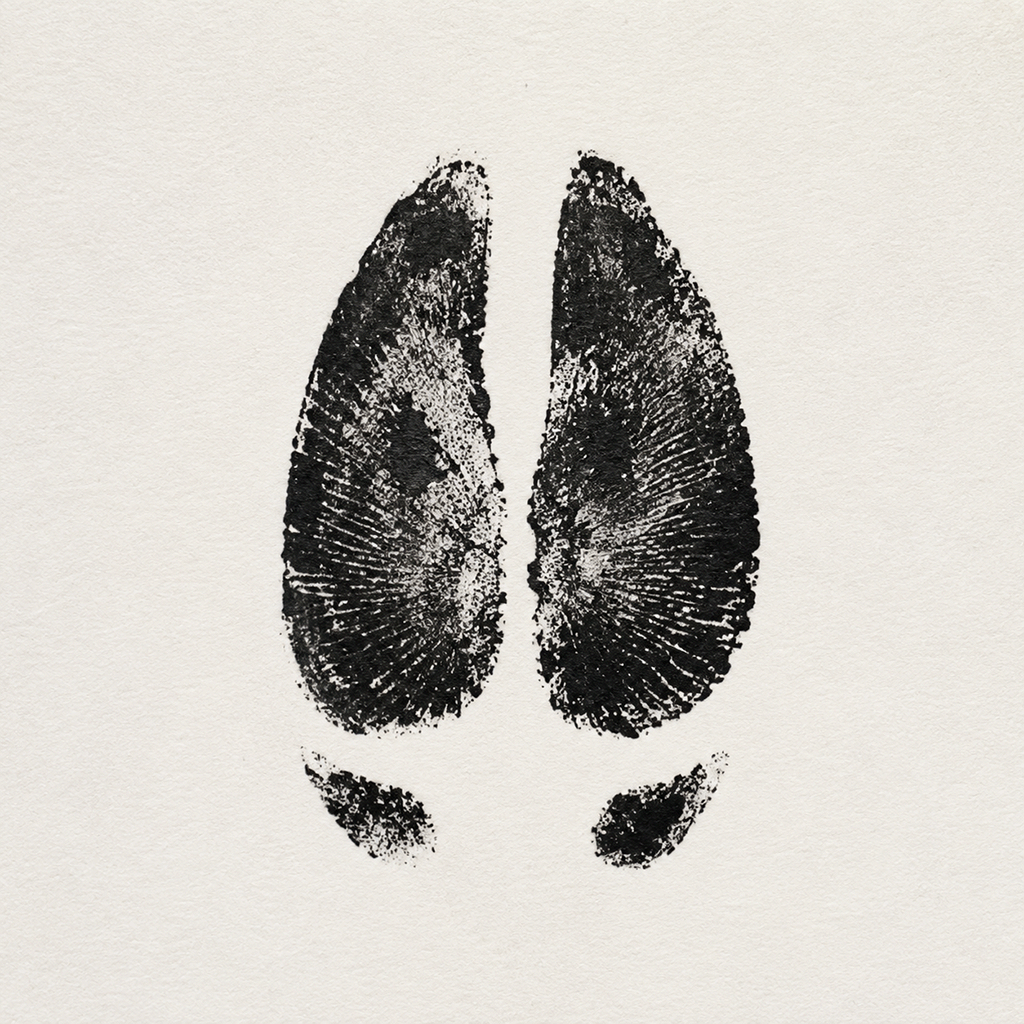
The Pig, Unspeaking
Horrific Language and Nonhuman Semiosis in Miyazawa Kenji’s “The Pig of the Furandon Agricultural School”
DOI:
https://doi.org/10.52537/humanimalia.24438Keywords:
Miyazawa Kenji, anthropocentrism, nonhuman animals, extralingual representation, onomatopoeia, biosemioticsAbstract
This article examines the representation of human language and its limits in the short story “The Pig of the Furandon Agricultural School” (c. 1921) by the early twentieth-century Japanese writer Miyazawa Kenji. The story features a domesticated pig, fluent in human language, who is slaughtered for his meat despite displaying a level of linguistic ability generally perceived as exclusively human. The pig’s literacy does not save his life; rather, it renders his experience of the human world more horrific, as he overhears what humans say about his edible body, peruses a death consent form he is subsequently coerced into signing, and comes to realize the transformation into meat that awaits him. In Miyazawa’s story, therefore, the nonhuman animal’s understanding of human language proves irrelevant to a pre-existing hierarchy of lives organized along species lines. As the pig becomes aware of his fate, the text ceases to textualize his speech and psyche, as if refusing to further territorialize the pig within human semantics, while continuing to describe how he appears, sounds, and behaves through onomatopoeia. This article foregrounds the ways in which Miyazawa’s depiction of the pig exposes the limits of human language and offers a glimpse of a world not entirely bound to an anthropocentric semiotic system.
Downloads
References
Armbruster, Karla. “What Do We Want from Talking Animals?: Reflections on Literary Representations of Animal Voices and Minds.” In Speaking for Animals: Animal Autobiographical Writing, edited by Margo DeMello, 17–34. Routledge, 2012.
Attridge, Derek. Peculiar Language: Literature as Difference from the Renaissance to James Joyce. Cornell University Press, 1988.
Barthes, Roland. Elements of Semiology. Translated by Annette Lavers and Colin Smith. Hill and Wang, 1968.
Beer, Gillian. “Animal Presences: Tussles with Anthropomorphism.” Comparative Critical Studies 2, no. 3 (2005): 311–22. https://doi.org/10.3366/ccs.2005.2.3.311.
Bercea, Adrian. “Miyazawa Kenji: ‘Furandon nōgakkō no buta’ disutopiaron” 宮沢賢治「フランドン農学校の豚」ディストピア論: 賢者の石としての豚のカニバリズム” [“On the Dystopian World of Miyazawa Kenji’s The Pig of the Furandon Agricultural School: The Cannibalism of the Pig as a Philosopher’s Stone”]. Bungaku to kankyō 文学と環境 [Literature and Environment] 26 (2023): 4–14.
Cwiertka, Katarzyna Joanna. Modern Japanese Cuisine: Food, Power and National Identity. Reaktion, 2006.
Derrida, Jacques. “‘Eating Well’, or the Calculation of the Subject.” Translated by Peter Connor and Avital Ronnell. In Points…: Interviews, 1974–1994, edited by Elisabeth Weber, 255–87. Stanford University Press, 1995.
Ferber, Michael. Poetry and Language: The Linguistics of Verse. Cambridge University Press, 2019.
Fischer, Michael M. J. Anthropological Futures. Duke University Press, 2009.
Golley, Gregory. When Our Eyes No Longer See: Realism, Science, and Ecology in Japanese Literary Modernism. Harvard University Asia Center, 2008.
Herman, David. Narratology beyond the Human: Storytelling and Animal Life. Oxford University Press, 2018.
Kohn, Eduardo. How Forests Think: Toward an Anthropology beyond the Human. University of California Press, 2013.
Long, Hoyt. On Uneven Ground: Miyazawa Kenji and the Making of Place in Modern Japan. Stanford University Press, 2012.
Majima Ayu 真嶋亜有. “Nikushoku to iu kindai: Meijiki Nihon ni okeru shokuniku gunji juyō to nikushokukan no tokuchō” 肉食という近代:明治期日本における食肉軍事需要と肉食観の特徴 [“Carnivorous Modernity: The Military Demand of Meat and Characteristics of Carnivory during Meiji Japan”]. Ajia bunka kenkyū bessatsu アジア文化研究別冊 [Asia Cultural Studies Special Issue] 11 (2002): 213–30.
Marran, Christine L. Ecology without Culture: Aesthetics for a Toxic World. University of Minnesota Press, 2017.
Miyazawa Kenji 宮澤賢治. “Furandon nōgakkō no buta” フランドン農学校の豚 [“The Pig of the Furandon Agricultural School”]. In Shin kōhon Miyazawa Kenji zenshū. Vol. 10: Dōwa III honbun-hen 新校本宮澤賢治全集 10童話Ⅲ本文篇 [New Variorum Edition of Miyazawa Kenji Collections. Vol. 10: Children’s Stories III Main Bodies], 322–37. Chikuma Shobō, 1995.
“Nenpu: 1925 nen” 年譜:1925年 [“Chronological Records: The Year of 1925”]. In Shin kōhon Miyazawa Kenji zenshū. Vol. 16 (ge): Hoi, shiryō, nenpu-hen 新校本宮澤賢治全集 16下、補遺・資料、年譜篇 [New Variorum Edition of Miyazawa Kenji Collections. Vol. 16 (Part 2): Addenda, Data, and Chronological Records], 285–306. Chikuma Shobō, 2001.
Nishi Masahiko 西成彦. Mori no gerira Miyazawa Kenji 森のゲリラ宮澤賢治 [A Forest Guerrilla Miyazawa Kenji]. Heibonsha, 2004.
Okada Tetsu 岡田哲. Tonkatsu no tanjō: Meiji yōshoku kotohajime とんかつの誕生:明治洋食事始め [The Birth of Tonkatsu: The Beginning of Western Dishes in the Meiji Period]. Kōdansha, 2000.
Plumwood, Val. Environmental Culture: The Ecological Crisis of Reason. Routledge, 2002.
Plumwood, Val. “Journey to the Heart of Stone.” In Culture, Creativity and Environment: New Environmentalist Criticism, edited by Fiona Becket and Terry Gifford, 17–36. Rodopi, 2007.
Pulvers, Roger. “Japan as a Nation of Animal Lovers — As Pets or When They’re on a Plate | The Frandon Agricultural School Pig.” Asia-Pacific Journal 7, no. 4 (2009). https://apjjf.org/Roger-Pulvers/3215/article.
Pulvers, Roger. Odorokubeki Nihongo 驚くべき日本語 [Marvelous Japanese]. Translated by Hayakawa Atsuko 早川敦子. Shūeisha, 2014.
Sandilands, Catriona. The Good-Natured Feminist: Ecofeminism and the Quest for Democracy. University of Minnesota Press, 1999.
Saussure, Ferdinand de. Course in General Linguistics. Edited by Charles Bally, Albert Sechehaye, and Albert Riedlinger. Translated by Wade Baskin. McGraw-Hill, 1966.
Seshadri, Kalpana. “Being Human: Bestiality, Anthropophagy, and Law.” UMBR(a): A Journal of the Unconscious 1 (2003): 97–114.
Seshadri, Kalpana. HumAnimal: Race, Law, Language. University of Minnesota Press, 2012.
Singer, Peter. “Preface to the 1975 edition.” In Animal Liberation, xx–xxv. Ecco, 2002.
Suzuki, Toshitaka N. “Animal Linguistics.” Annual Review of Ecology, Evolution, and Systematics 55, no. 1 (2024): 205–26. https://doi.org/10.1146/annurev-ecolsys-102622-030253.
Suzuki, Toshitaka N. “How to Study Animal Syntax.” In The Oxford Handbook of Approaches to Language Evolution, edited by Limor Raviv and Cedric Boeckx, 593–606. Oxford University Press, 2025.
Wolfe, Cary. Before the Law: Humans and Other Animals in a Biopolitical Frame. University of Chicago Press, 2013.
Zapf, Hubert. Literature as Cultural Ecology: Sustainable Texts. Bloomsbury Academic, 2016.
Published
Issue
Section
License
Copyright (c) 2026 Miyabi Goto (Author)

This work is licensed under a Creative Commons Attribution 4.0 International License.
How to Cite