Go Panda Go!
The Invention of the Panda Circus and Its Exhibition in China–Japan Municipal Diplomacy
DOI:
https://doi.org/10.52537/humanimalia.22582Keywords:
The Giant Panda, Animal Diplomacy, China–Japan relations, Animal Circus, Emotional Labour, Animal Communication and MediaAbstract
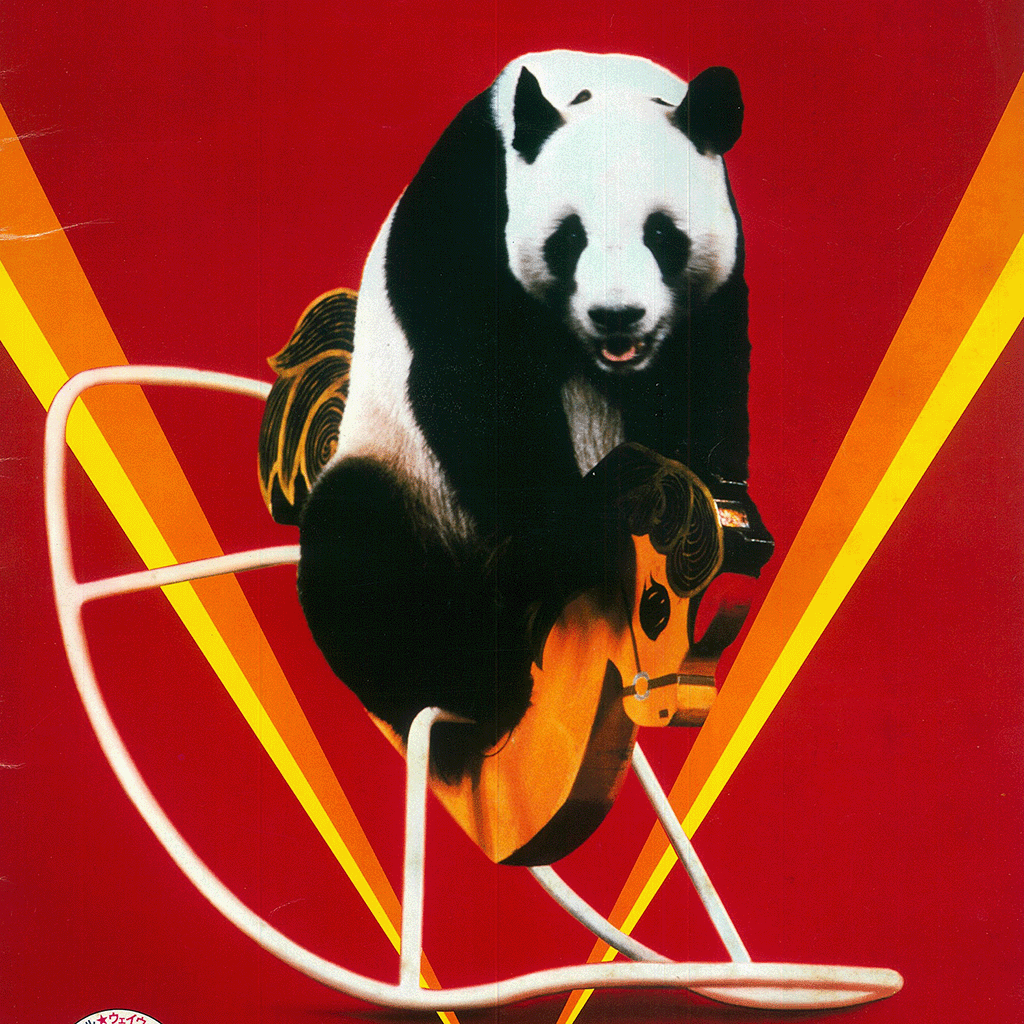
This article examines the invention and exhibitions of the panda circus to explore the political, economic, and cultural influence of the giant panda on China–Japan diplomacy and the transnational cultural economy. Using oral history interviews and archival materials, the authors explain how, in 1981, a giant panda named Wei Wei became China’s first panda entertainer in Japan, embarking on a cross-country tour supported by friendship-city agreements and grassroots friendship movements. By discussing Wei Wei’s unexpected and sometimes ferocious responses to human demands, as well as Japanese media reporting on his “rebellion”, the authors show how Wei Wei’s behaviour raised Japanese public awareness of the giant panda’s individuality and agency. The circus tour not only facilitated municipal-level China–Japan relations but also generated a new mode of anthropomorphizing the giant panda—one that challenged consumerist representations and helped Japanese audiences recognize the giant panda’s suffering. The authors argue that Wei Wei’s “rebellion” disrupted human political expectations and economic transactions in this episode of China–Japan diplomacy, contributing to a re-envisioning of bilateral relations beyond a strictly political-economic framework. Overall, the article offers an interdisciplinary, trans-Asia approach that explores the intersections of animal agency, emotional labour, international relations, media, and performance.
Downloads
References
Akagi, Roy Hidemichi. “Japan’s Economic Relations with China.” Pacific Affairs 4, no. 6 (1931): 488–510. https://doi.org/10.2307/2750130.
Almiron, Núria, Matthew Cole, and Carrie Packwood Freeman. “Critical Animal and Media Studies: Expanding the Understanding of Oppression in Communication Research.” European Journal of Communication 33, no. 4 (2018): 367–80. https://doi.org/10.1177/0267323118763937.
Andrews, Kristin. The Animal Mind: An Introduction to the Philosophy of Animal Cognition. London: Routledge, 2020.
Baratay, Éric. Animal Biographies: Toward a History of Individuals. Translated by Lindsay Turner. Athens: University of Georgia Press, 2022.
Barua, Maan. “Affective Economies, Pandas, and the Atmospheric Politics of Lively Capital.” Transactions of the Institute of British Geographers 45, no. 3 (2019): 678–92. https://doi.org/10.1111/tran.12361.
Belozerskaya, Marina. The Medici Giraffe: And Other Tales of Exotic Animals and Power. New York: Little, Brown, 2006.
Bender, Daniel. E. The Animal Game: Searching for Wildness at the American Zoo. Cambridge, Massachusetts: Harvard University Press, 2016.
Bekoff, Marc. “Animal Emotions: Exploring Passionate Natures.” BioScience 50, no. 10 (2000): 861–70.
Bouissac, Paul. Circus as Multimodal Discourse: Performance, Meaning, and Ritual. London: Bloomsbury, 2012.
Brantz, Dorothee. Introduction to Beastly Natures: Animals, Humans, and the Study of History, 1–12. Charlottesville: University of Virginia Press, 2010.
Bunderson, J. Stuart, and Jeffery A. Thompson. “The Call of the Wild: Zookeepers, Callings, and the Double-Edged Sword of Deeply Meaningful Work.” Administrative Science Quarterly 54, no. 1 (2009): 32–57. https://doi.org/10.2307/27749305.
Chugoku shanhai zatsugidan nihon judan koen: sekaino supa aidoru Wei Wei [China’s Shanghai Acrobatic Troupe’s Tour across Japan: The World’s Super Idol Wei Wei]. Nitchu Geikyo and Japan–China Friendship Association, c. 1981.
Cole, Matthew, and Kate Stewart. Our Children and Other Animals: The Cultural Construction of Human–Animal Relations in Childhood. Farnham: Ashgate, 2014.
Coleman, Jon T. “The Shoemaker’s Circus: Grizzly Adams and Nineteenth-Century Animal Entertainment.” Environmental History 20, no. 4 (2015): 593–618. https://doi.org/10.1093/envhis/emv102.
Collard, Rosemary‐Claire. “Panda Politics.” The Canadian Geographer/Le Géographe Canadien 57, no. 2 (2013): 226–32. https://doi.org/10.1111/cag.12010.
Colling, Sarat. Animal Resistance in the Global Capitalist Era. East Lansing: Michigan State University Press, 2020.
Coulter, Kendra. “Beyond Human to Humane: A Multispecies Analysis of Care Work, Its Repression, and Its Potential.” Studies in Social Justice 10, no. 2 (2016): 199–219. https://doi.org/10.26522/ssj.v10i2.1350.
Cowie, Helen. “Elephants, Education and Entertainment: Travelling Menageries in Nineteenth-Century Britain.” Journal of the History of Collections 25, no. 1 (2013): 103–17. https://doi.org/10.1093/jhc/fhr037.
Doi, Toshimitsu. “Nihon no panda tachi” [“Pandas in Japan”]. In Panda to watashi [Panda and Me], edited by Kuroyanagi Tetsuko and Nakama Tachi, 102–114. Tokyo: Asahi Shinbun Shuppan, 2022.
Fu Qi Feng and Fu Teng Long. 中国杂技史 [A History of Chinese Acrobatics]. Shanghai: Shanghai People’s Press, 2004.
Fang, Guo. Zainichi kakyo no aidenttiti no henyo [The Changing Identity of Overseas Chinese in Japan]. Tokyo: Toshindo, 1999.
Fogel, Joshua A. “‘Shanghai-Japan’: The Japanese Residents’ Association of Shanghai.” The Journal of Asian Studies 59, no. 4 (2000): 927–50. https://doi.org/10.2307/2659217.
Gruen, Lori. Entangled Empathy: An Alternative Ethics for Our Relationships with Animals. New York: Lantern Books, 2015.
Han, Eric. “A True Sino-Japanese Amity?: Collaborationism and the Yokohama Chinese (1937–1945).” The Journal of Asian Studies 72, no. 3 (2013): 587–609. https://doi.org/10.1017/S0021911813000533.
Hartig, Falk. “Panda Diplomacy: The Cutest Part of China’s Public Diplomacy.” The Hague Journal of Diplomacy 8, no. 1 (2013): 49–78. https://doi.org/10.1163/1871191X-12341245.
Henriot, Christian. “‘Little Japan’ in Shanghai: An Insulated Community, 1875–1945.” In New Frontiers: Imperialism’s New Communities in East Asia, 1842–1953, edited by Robert Brickers and Christian Henriot, 146–69. Manchester: Manchester University Press, 2017.
Hochschild, Arlie Russell. The Managed Heart: Commercialization of Human Feeling. Berkeley: University of California Press, 1983.
Hoffman, Alice. “Reliability and Validity in Oral History.” In Oral History: An Interdisciplinary Anthology, edited by David K. Dunaway and Willa K. Baum, 87–93. Walnut Creek, CA: Sage, 1996.
Howell, Philip. “Animals, Agency, and History.” In The Routledge Companion to Animal–Human History, edited by Hilda Kean and Philip Howell, 197–221. London: Routledge, 2018.
Hribal, Jason. “‘Animals are Part of the Working Class’: A Challenge to Labor History.” Labor History 44, no. 4 (2003), 435–53. https://doi.org/10.1080/0023656032000170069.
Huang Dahui, and Zhou Yingxin, eds. 中日友好交流三十年, 1978–2008. 文化教育与民间交流卷 [Thirty Years of Friendly Sino–Japanese Exchange, 1978–2008: Cultural, Educational, and Folk Exchange]. Beijing: Social Science Literature Publishing House, 2008.
Ienaga Masayuki. Chugoku panda gaiko-shi [The History of China’s Panda Diplomacy]. Tokyo: Kodansha, 2022.
Itoh, Mayumi. Japanese War Orphans in Manchuria: Forgotten Victims of World War II. New York: Palgrave Macmillan, 2010.
Itoh, Mayumi. Pioneers of Sino-Japanese Relations: Liao and Takasaki. New York: Palgrave Macmillan, 2012.
Kagotani, Naoto. “The Chinese Merchant Community in Kobe and the Development of the Japanese Cotton Industry, 1890–1941.” In Japan, China and the Growth of the Asian International Economy, 1850–1949 edited by Kaoru Sugihara, 49–72. Oxford: Oxford University Press, 2005.
Krebber, André and Roscher, Mieke. “Introduction: Biographies, Animals and Individuality.” In Animal Biography: Re-Framing Animal Lives, edited by André Krebber and Mieke Roscher, 1–15. Cham: Palgrave Macmillan, 2018.
Leira, Halvard, and Iver B. Neumann. “Beastly Diplomacy.” The Hague Journal of Diplomacy 12, no. 4 (2017): 337–59. https://doi.org/10.1163/1871191X-12341355.
Lorimer, Jamie. “Nonhuman Charisma.” Environment and Planning D: Society and Space 25, no. 5 (2007): 911–32. https://doi.org/10.1068/d71j.
Masson, Jeffrey Moussaieff and Susan McCarthy. When Elephants Weep: The Emotional Lives of Animals. New York: Dell Publishing, 1995.
McEwen, Andrew. “‘He Took Care of Me’: The Human–Animal Bond in Canada’s Great War.” In The Historical Animal, edited by Susan Nance, 272–88. Syracuse, New York: Syracuse University Press, 2015.
Miller, Ian Jared. The Nature of the Beasts: Empire and Exhibition at the Tokyo Imperial Zoo. Berkeley, CA: University of California Press, 2013.
Minami, Hiroshi. “The Perspective about the Effect that a Big Event Gives for Regional Economy.” Japanese Journal of Real Estate Sciences 28, no. 1 (2014): 36–41.
Mizelle, Brett. “Contested Exhibitions: The Debate over Proper Animal Sights in Post-Revolutionary America.” Worldviews 9, no. 2 (2005): 219–35. https://doi.org/10.1163/1568535054615367.
Mori Tokihiko, ed. Zaikabo to chugoku shakai [China-based Spinning Factories and Chinese Society]. Kyoto: Kyoto University Press, 2005.
Nance, Susan. Entertaining Elephants: Animal Agency and the Business of the American Circus. Baltimore, MD: Johns Hopkins University Press, 2013.
Nance, Susan. Introduction to The Historical Animal, edited by Susan Nance, 1–15. Syracuse, NY: Syracuse University Press, 2015.
Nicholls, Henry. The Way of the Panda. New York: Pegasus Books, 2012.
Nitchu boeki sokushin kai no kiroku wo tsukuru kai. Nitchu boeki sokushin kai: Sono undo to kiseki [Association for the Promotion of Japan–China Trade: Its Movement and Trajectory]. Tokyo: Dōjinsha, 2010.
Nihon chugoku yuko kyokai, “Shinshun ni subarashii otoshidama” [“A Wonderful New Year’s Gift”]. Nihon to Chugoku [Japan and China], 1 January 1981, 16.
Nihon chugoku yuko kyokai, ed. Nitchu yuko undo no hanseiki: sono ayumi to shashin [Half a Century of the Japan–China Friendship Movement: Its History and Photographs]. Tokyo: Keyakisha, 2000.
Nitchu yuko kyokai, ed. Nitchu yuko undo gojunen [Fifty Years of the Japan–China Friendship Movement]. Tokyo: Tohoshoten, 2000.
Otmazgin, Nissim Kadosh. Regionalizing Culture: The Political Economy of Japanese Popular Culture in Asia. Honolulu: University of Hawaii Press, 2013.
Peterson, Michael. “The Animal Apparatus: From a Theory of Animal Acting to an Ethics of Animal Acts.” TDR 51, no. 1 (2007): 33–48.
Ringmar, Erik. “Audience for a Giraffe: European Expansionism and the Quest for the Exotic.” Journal of World History 17, no. 4 (2006): 375–97.
Rollin, Bernard E. The Unheeded Cry: Animal Consciousness, Animal Pain and Science. Oxford: Oxford University Press, 1989.
Roscher, Mieke. “New Political History and the Writing of Animal Lives.” In The Routledge Companion to Animal–Human History, edited by Hilda Kean and Philip Howell, 53–75. London: Routledge, 2018.
Sato, Kumiko. “From Hello Kitty to Cod Roe Kewpie: A Postwar Cultural History of Cuteness in Japan.” Asian Intercultural Contact 14, no. 2 (2009): 38–42.
Sekiguchi, Sueo. Chugoku keizai o shindan suru [Assessing the Chinese Economy]. Tokyo: Nihon keizai shinbunsha, 1979.
Seraphim, Franziska. “People’s Diplomacy: The Japan-China Friendship Association and Critical War Memory in the 1950s.” In Routledge Handbook of Memory and Reconciliation in East Asia, edited by Mikyoung Kim, 196–211. London: Routledge, 2016.
Serikawa Yugo, dir. Panda no daiboken [The Panda’s Great Adventure]. Toei, 1973.
Shinjo Taku, dir. Panda monogatari [Panda Story]. Toho, 1988.
Soeya, Yoshihide. Japan’s Economic Diplomacy with China, 1945–1978. Oxford: Clarendon Press, 1998.
Songster, E. Elena. Panda Nation: The Construction and Conservation of China’s Modern Icon. New York: Oxford University Press, 2018.
Sugai Norio. “Jichitai no Kokusai katsudo” [“International Activities by Municipalities’]. Jichitai no kokusai seisaku [International Policies by Municipalities], edited by Keiichi Matsushita, 207–28. Tokyo: Gakuyo shobo, 1988.
Swart, Sandra. “The Other Citizens: Nationalism and Animals.” In The Routledge Companion to Animal–Human History, edited by Hilda Kean and Philip Howell, 31–52. London: Routledge, 2018.
Tait, Peta. “Trained Performances of Love and Cruelty between Species.” Performance Research 14, no. 2 (2009): 67–73. https://doi.org/10.1080/13528160903319554.
Takahata Isao, dir. Panda kopanda [Panda! Go Panda!]. Tokyo Movie, 1972.
Takahata Isao, dir. Panda, kopanda: Ame furi sakasu. [Panda! Go, Panda! — The Rainy-Day Circus]. Tokyo Movie, 1973.
Tamura, Yoshikazu. “Jichitai no kokusai koryū” [“International exchanges by Municipalities”]. In Kiro ni tatsu kokusai chitsujo [International Order at a Crossroads], edited by Yoshikazu Tamura, Kōzo Yanazase, and Takanobu Yamashita, 251–71. Kyoto: Hōritsu bunkasha, 1989.
Vandersommers, Daniel. Entangled Encounters at the National Zoo: Stories from the Animal Archive. Lawrence, Kansas: University Press of Kansas, 2023.
Vandersommers, Dan, Thomas Aiello, and Susan Nance. “Animal History: A Brief Introduction to Its Past and Future.” Animal History 1, no. 1 (2025): 5–12. https://doi.org/10.1525/ah.2024.1.
Wadiwel, Dinesh. “Chicken Harvesting Machine: Animal Labor, Resistance, and the Time of Production.” South Atlantic Quarterly 117, no. 3 (2018): 527–49. https://doi.org/10.1215/00382876-6942135.
Wang Feng. “发展中国的马戏艺术” [“Developing China’s Circus Arts”]. In 马戏—没有边疆的世界 [Circus: A World without Borders], edited by Wang Feng, 90–115. Beijing: China Federation of Literary and Art Circles Publishing House, 1997.
Wang Feng, Zong Zheng Wen, Zhou Shi Xi, Zhou Qiu Fan, and Dai Shu Cheng. 上海杂技团团史 1951–1990. [The History of the Shanghai Acrobatic Troupe 1951–1990.] Shanghai: The Shanghai Acrobatic Troupe, 1991.
Weber, Nadir. “Diplomatic History.” In The Handbook of Historical Animal Studies, edited by Mieke Roscher, André Krebber, and Brett Mizelle, 197–211. Berlin: De Gruyter Oldenbourg, 2021.
Yokohama shanhai jusshu-nen kinen keishuku daihyodan haken jikko iinkai, ed. Yokohama shanhai yuko toshi koryu junen no ayumi: hito to minato to [Ten Years of Yokohama–Shanghai Friendship City Exchange: People and Ports]. Yokohama shanhai jusshu-nen kinen keishuku daihyodan haken jikko iinkai, 1984.
Zelinsky, Wilbur. “The Twinning of the World: Sister Cities in Geographic and Historical Perspective.” Annals of the Association of American Geographers 81, no. 1 (1991): 1–31. https://doi.org/10.1111/j.1467-8306.1991.tb01676.x.
Zhang, Linda. “Pandas: China’s Most Popular Diplomats.” American Enterprise Institute, 17 June 2021. https://www.aei.org/research-products/report/pandas-chinas-most-popular-diplomats/.
Zhang, Tracy Ying. “Bending the Body for China: The Uses of Acrobatics in Sino-US Diplomacy during the Cold War.” International Journal of Cultural Policy 22, no. 2 (2016): 123–46. https://doi.org/10.1080/10286632.2014.956665.
Zhou, Xueguang, and Liren Hou. “Children of the Cultural Revolution: The State and the Life Course in the People’s Republic of China.” American Sociological Review 64, no. 1 (1999): 12–36.
Published
Issue
Section
License
Copyright (c) 2025 Tracy Ying Zhang, Chikako Nagayama (Author)

This work is licensed under a Creative Commons Attribution 4.0 International License.
How to Cite