From Farm to Fame
The Ideology of Animal Biography in Post-War Agricultural Discourse
DOI:
https://doi.org/10.52537/humanimalia.21899Keywords:
animal history, animal individuals, animal work, farmed animals, food animals, animal sexualityAbstract
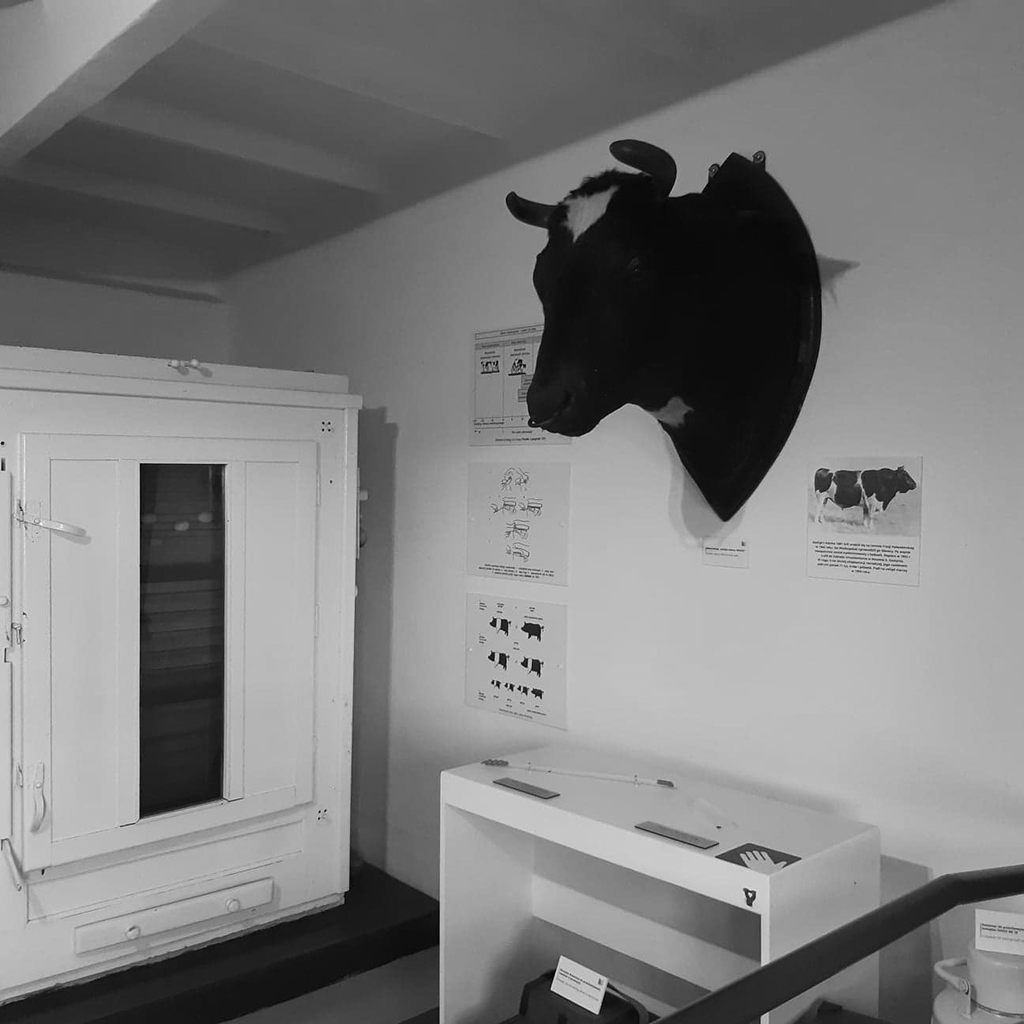
This article explores the biography of Geeltje’s Adema, a prominent breeding bull in post-war Polish agricultural discourse, to examine the ideological dimensions of animal biographies within the context of human-animal relations and agricultural modernization. Situating Adema’s narrative within the transition from small-scale farming to industrialized agriculture, the study highlights how notions of productivity, "biological progress," and breeding discourse shaped representations of farm animals. The analysis draws on Timothy Morton’s concept of agrilogistics and biopolitical frameworks, revealing how animal biographies can simultaneously emphasize individuality and obscure systemic violence by embedding lives within anthropocentric narratives of utility and genetic optimization. Adema’s life serves as a lens to investigate the intersections of individuality, commodification, and sexualization in pre-industrial agricultural practices, contrasting them with the depersonalization inherent in industrial farming. The study underscores the role of animal biographies in normalizing exploitation while contributing to broader discussions on human-animal relations, ethics, and historical representation.
Downloads
References
Anker, Peder. “Environmental History versus History of Science.” Reviews in Anthropology 31, no. 4 (2002): 309–22. https://doi.org/10.1080/00988150214748.
Balwierz, Eugeniusz. “Rozwój i osiągnięcia Stacji Sztucznego Unasieniania Bydła w Kosowie.” Przegląd hodowlany 5 (1957): 19–23.
Baratay, Éric. Animal Biographies: Toward a History of Individuals. Translated by Lindsay Turner. Athens: The University of Georgia Press, 2022.
Blanchette, Alex. Porkopolis: American Animality, Standardized Life, and the Factory Farm. Durham, NC: Duke University Press, 2020.
Bulliet, Richard W. Hunters, Herders, and Hamburgers: The Past and Future of Human-Animal Relationships. New York: Columbia University Press, 2005.
Campbell, Joseph. The Hero with a Thousand Faces. Pantheon Books, 2008.
Chiles, Robert M., and Amy J. Fitzgerald. “Why Is Meat So Important in Western History and Culture? A Genealogical Critique of Biophysical and Political-Economic Explanations.” Agriculture and Human Values, 35, no. 1 (2018): 1–17. https://doi.org/10.1007/s10460-017-9787-7.
Contreras, Jesus. “Meat Consumption throughout History and across Cultures.” Sciences des aliments 28, no. 4–5 (2008): 293–302.
Fedorovych, E. I., V. V. Fedorovych, I. Y. Semchuk, N. M. Fedak, L. V. Ferenents, N. P. Mazur, P. V. Bodnar, et al. “Genetic Potential and Breeding Value of Animals — An Essential Component of the Genetic Progress in Dairy Cattle.” Ukrainian Journal of Ecology 11, no. 2 (2021): 306–12.
Fiddes, Nick. Meat: A Natural Symbol. London: Routledge, 2004.
Fitzgerald, Deborah. Every Farm a Factory: The Industrial Ideal in American Agriculture. New Haven, CT: Yale University Press, 2003.
Fleischman, Thomas. Communist Pigs: An Animal History of East Germany’s Rise and Fall. Seattle: University of Washington Press, 2020.
Fudge, Erica. “Animal Lives.” History Today 54, no. 10 (2004): 21–26.
Głowiński, Jan. “Buhaj Geeltje’s Adema nie żyje.” Przegląd Hodowlany 6 (1959): 13–14.
Głowiński, Jan. “Zasłużony buhaj Geeltje’s Adema skończył 15 lat.” Przegląd Hodowlany 8–9 (1958): 64–65.
Holloway, Lewis, Carol Morris, Ben Gilna, and David Gibbs. “Choosing and Rejecting Cattle and Sheep: Changing Discourses and Practices of (de)Selection in Pedigree Livestock Breeding.” Agriculture and Human Values 28, no. 4 (2011): 533–47. https://doi.org/10.1007/s10460-010-9298-2.
Holloway, Lewis, and Carol Morris. “Contesting Genetic Knowledge-Practices in Livestock Breeding: Biopower, Biosocial Collectivities, and Heterogeneous Resistances.” Environment and Planning D: Society and Space, 30, no. 1 (2012): 60–77. https://doi.org/10.1068/d2911.
Jarzębowska, Gabriela. “Historia jednego buhaja: Przyczynek do analizy zwierzęcych biografii.” Czas Kultury 39, no. 2 (2023): 34–43.
Jarzębowska, Gabriela. “State Capitalism as a Crisis of Imagination. Factory Farms in the Polish People’s Republic in the 1970s.” Praktyka Teoretyczna, 51, no. 1 (2024): 51–72. https://doi.org/10.19195/prt.2024.1.3.
Krebber, André, and Mieke Roscher. “Introduction: Biographies, Animals and Individuality.” In Animal Biography: Re-Framing Animal Lives, Cham: Palgrave Macmillan, 2018.
Mitman, Gregg. The State of Nature: Ecology, Community, and American Social Thought, 1900–1950. Chicago: University of Chicago Press, 1992.
Morton, Timothy. Dark Ecology: For a Logic of Future Coexistence. New York: Columbia University Press, 2016.
Leder, Drew. “Old McDonald’s Had a Farm: The Metaphysics of Factory Farming.” Journal of Animal Ethics 2, no. 1 (2012): 73–86. https://doi.org/10.5406/janimalethics.2.1.0073.
Lee, Paula Young, ed. Meat, Modernity, and the Rise of the Slaughterhouse. Durham: University of New Hampshire Press, 2008.
Leroy, Frédéric, and Istvan Praet. “Meat Traditions: The Co-Evolution of Humans and Meat.” Appetite 90 (2015): 200–11. https://doi.org/10.1016/j.appet.2015.03.014.
Nash, Catherine. “Breed Wealth: Origins, Encounter Value and the International Love of a Breed.” Transactions of the Institute of British Geographers 45, no. 4 (2020): 849–61. https://doi.org/10.1111/tran.12383.
Neo, Harvey, and Jody Emel. Geographies of Meat: Politics, Economy and Culture. London: Routledge, 2017.
Pasztor, Maria, and Dariusz Jarosz. Increase Supply, Reduce Demand and Punish Severely: A Contextual History of Meat in Communist Poland. Translated by Alex Shannon. Berlin: Peter Lang, 2020.
Petitt, Andrea, and Camilla Eriksson. “Breeding beyond Bodies: Making and ‘Doing’ Cattle.” Society & Animals 30, no. 1 (2019): 108–26. https://doi.org/10.1163/15685306-00001733.
Raczyk, Włodzimierz. “Uwagi do artykułu inż. Balwierza.” Przegląd Hodowlany 10–11 (1957): 25–26.
Ritvo, Harriet. The Animal Estate: The English and Other Creatures in the Victorian Age. Cambridge, MA: Harvard University Press, 1989.
Stanescu, James. “Beyond Biopolitics: Animal Studies, Factory Farms, and the Advent of Deading Life.” PhaenEx, 8, no. 2 (2013): 135–60. https://doi.org/10.22329/p.v8i2.4090.
Tansey, Geoff, and Joyce D’Silva, eds. The Meat Business: Devouring a Hungry Planet. London: Earthscan, 1999.
Tsovel, Ariel. “What Can a Farm Animal Biography Accomplish? The Case of Portrait of a Burger as a Young Calf.” Society & Animals 13, no. 3 (2005): 245–62. https://doi.org/10.1163/1568530054927744.
Twine, Richard. “Addressing the Animal–Industrial Complex.” In The Politics of Species: Reshaping Our Relationships with Other Animals, edited by Raymond Corbey and Annette Lanjouw, 77–91. Cambridge: Cambridge University Press, 2013.
White, Richard. “Environmental History, Ecology, and Meaning.” The Journal of American History 76, no. 4 (1990): 1111–16. https://doi.org/10.2307/2936588.
Wojtuś, Mateusz. “Chów i hodowla zwierząt gospodarskich.” Muzeum Narodowe Rolnicta, https://muzeum-szreniawa.pl/chow_i_hodowla_zwierzat/.
Zaraska, Marta. Meathooked: The History and Science of Our 2.5-Million-Year Obsession with Meat. New York: Basic Books, 2016.
Published
Issue
Section
License
Copyright (c) 2025 Gabriela Jarzębowska (Author)

This work is licensed under a Creative Commons Attribution 4.0 International License.
How to Cite