“Elephants Are the Founders of Ways and Maps”
More-than-Human Mobility in Katavi, West Tanzania
DOI:
https://doi.org/10.52537/humanimalia.19613Keywords:
More-than-human, animal mobility, spatial development, hunting, forest history, environmental anthropologyAbstract
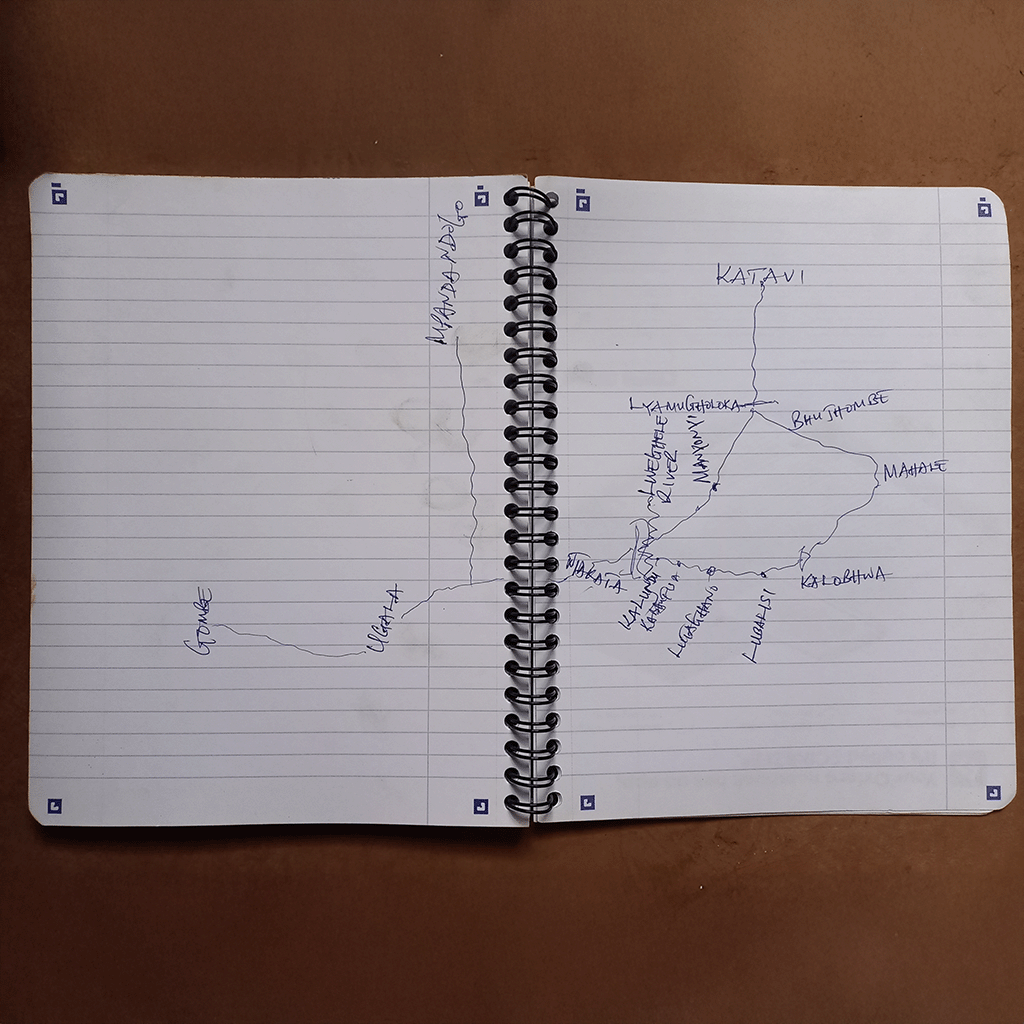
This paper discusses elephants’ active role in creating animal pathways and how these have provided critical infrastructure for human mobility in West Tanzania. It highlights elephant pathways as a case that flips the conventional view of humans as the dominant shapers of space. Documenting this elephant network through mental maps drawn by elders with hunting experience, it shows how elephants have spaced human mobility, and how Bende and Tongwe communities spatially attuned to elephant movements. This interaction between elephant and human spatial use throughout time complicates the dominant focus on human-elephant conflicts, showing how both elephants and humans have spatially adapted to each other. I discuss the Bhujheghe hunting association which transmitted knowledge about the elephant network as well as practices necessary to deal with the ontological closeness elephants share with humans. This paper situates elephant movements within the broader relationships between animals, forest spirits, humans, and mountains in the lively landscape.
Downloads
Published
Issue
Section
License
Copyright (c) 2025 Emelien Devos (Author)

This work is licensed under a Creative Commons Attribution 4.0 International License.
How to Cite
Funding data