Actors in Time
Animal Histories, Behavioural Plasticity, and the Medieval Past
DOI: http://doi.org/10.52537/humanimalia.28276
Keywords: medieval animals, behavioural plasticity, human-animal relations, animal history, shifting baseline syndrome, ethology, medieval Europe.
OR? cat, dog, whale, wolf, falcon, fox, raven Sophie Page is Professor of Medieval History at University College London, where she specializes in magic, natural philosophy, and the history of human–animal relations in medieval Europe. She is the author of Magic in the Cloister: Pious Motives, Illicit Interests, and Permissible Magic in the Monasteries of Late Medieval England (Penn State University Press, 2013) and has published widely on medieval cosmology, manuscript culture, and the intellectual history of the occult. She co-curated the major exhibition Spellbound: Magic, Ritual and Witchcraft at the Ashmolean Museum, Oxford (2018). Her current research explores interspecies communication from medieval Europe to the age of AI. Email: sophie.page@ucl.ac.uk Humanimalia 16.2 (Summer 2026)
Abstract
This paper responds to Éric Baratay’s call to locate animal behavioural plasticity in time, with particular reference to medieval Europe. It argues that attending to temporal scale enables historians to trace how environmental pressures, human activity, and interspecies contact shaped animal behaviour across generations — making visible patterns of adaptation that single-period studies cannot reveal — and exposes the contingency of human-animal relationships that might otherwise appear natural or inevitable. Drawing on medieval sources ranging from falconry manuals and hunting treatises to Irish legal tracts and monastic poetry, the paper explores how medieval observers documented individual variation, emotional life, and learned behaviour in hawks, dogs, foxes, and cats. It engages ethological and ecological models to interpret cases including the extinction of the wolf in medieval England and the progressive adaptation of the domestic cat to human and urban environments. The paper concludes that writing animal histories across large temporal scales is not only a scholarly imperative but an ethical one: it counters shifting baseline syndrome, holds ecological loss in view, and keeps readers attentive to the ongoing biodiversity crisis.
Eric Baratay’s paper calls with academic rigour and compassion for historians to “take the side of these living beings who are also actors […] to discover their history, which will be to some extent related to ours, and to some extent independent of it.”1 In my response I take up Baratay’s challenge to historians to locate the behavioural plasticity of animals in time, in this case with particular reference to my own area of expertise, Medieval Europe. Thinking about scale in relation to nonhuman animals is important for at least two reasons. First, it enables historians to trace how environmental pressures, human activity, and inter-species contact shape animal behaviour over generations, revealing patterns of adaptation that are invisible when animals are studied only in a single period.2 Second, attending to temporal scale exposes the contingency of human–animal relationships: what appears natural or inevitable — the domestication of cats, the persecution of wolves, the near-extinction of whales — emerges instead as the product of particular historical conditions that could, in principle, have unfolded differently.
Rather than focusing on the limits of sources on nonhuman animals in the past, it can be useful to look at what different historical contexts offer for thinking about animals in time. In medieval Europe, philosophers placed limits on animal rationality and self-control (though not on their sensory experiences and memory) but believed that animals could experience a variety of emotions in a physical and cognitive way, including love, hate, desire, aversion, joy, sadness, fear, and hope.3 As the English natural philosopher Adelard of Bath puts it in his Questions on Natural Science (ca. 1137), all creatures have “an inborn wish to exist” and “love to exist, and avoid not existing, with a natural desire”.4 This perspective resulted in some medieval sources that are rich in observing and imagining animal emotions, especially when compared to the period after the seventeenth century in Europe, in which René Descartes’ concept of animals as self-moving machines devoid of consciousness or sentience was influential and widely disseminated.5 Two particularly moving fifteenth-century examples are poems in which a hare laments living the life of an animal constantly hunted, and another in which a sparrowhawk and a human converse about their mutual fear of death.6 In contrast to early modern thinkers following Descartes, medieval European thinkers accepted and discussed individual variation in animals, including the expression of different personalities (or, as ethologists put it, “consistent individual behavioural variation”) that are apparent from birth but can be enhanced by learned behaviours (e.g. learned by repetition, from other animals or human training).
Baratay asks us to put ourselves alongside animals “to understand what they experience, what they go through, […] their psychological point of view, […] [which] requires empathy and adaptation”. Medieval treatises on hawks prompted austringers to think in this way — to be attentive to a bird’s perspective. To raise a bird from the fledgeling stage to flourish — learning to live alongside humans and to hunt within a multi-species group — humans needed to think like a hawk and be attentive to her physical and emotional needs (to calm fear and nurture love).7 This was not considered a natural process: medieval writers acknowledged that birds (and other animals) desired their freedom and wanted to return to their wild state. The household manual Le Ménagier de Paris (1393) is addressed to an unnamed wealthy teenage girl by her older husband. She is instructed in how to raise a sparrowhawk who has been taken from her nest at two days old: how to protect and train her, nurture the right kind of temperament in her, and encourage the bird to love her: “if you wish to be considered a good austringer, think first of your sparrow hawk and your dogs and only after them of yourself”.8
Our trainee hawker may be raising many young sparrowhawks, but as they grow and their temperaments emerge, she will focus her energy on the one whose calmness, strength, courage, and attentiveness are most evident. Nevertheless, hawks were not thought to have fixed characteristics: the manual notes that success in hunting may make a bird excited and bold, while failure makes her despondent and frustrated. A successful hunt involves the hawk having shared intentionality with both humans and the dogs who flush out the partridges and quail for her to catch (figure 1). Hunting dogs were given beds under the sparrowhawk’s perch to get them accustomed to each other. However, if the hawk failed in a hunt because the dogs she was working alongside were headstrong, young or flighty, this was blamed on the trainer, not the bird. Falconry manuals provide close descriptions of the (relatively short) lives of sparrowhawks from their birth. No surviving personal medieval names of hawks have yet been identified but the historian who takes up the challenge to write a speculative medieval biography of a sparrowhawk may choose the name Hábrók, cited in the Norse Poetic Edda as the “best of hawks”.9
In contrast to hawks, we have a list of over a thousand medieval dogs’ names in a single surviving manuscript (a hunting manual). These seem to wryly point to different temperaments or skillsets that range from Gentile, Courage, Joliboye, and Nosewise to Dredefull, Synfull, and Wrecche.10 Gaston Fébus, Count of Foix and author of a famous hunting manual called the Livre de chasse (1387–89), thought that elite hunting dogs should be addressed as “friend” or “brother”. Adaptation to inter-species communication was from both sides. An apprentice hunter looked after his Lord’s pack from the age of seven, living and sleeping with the dogs while he also learnt the verbal commands, visual signals (e.g. pointing), and blowing of the horn that were used to train them. Dogs were trained in ways that suited their sensory Umwelt: tracking the prey’s knot of scent trails, tracks, and droppings. In groups of hunting dogs, behavioural variability due to different personalities and capacities was (on the whole) necessary and valued — although perhaps not by everyone: long after the hunting day was over, weary apprentices could be found trekking back through forests and villages calling out for the over-adventurous dogs and those who had gone astray.
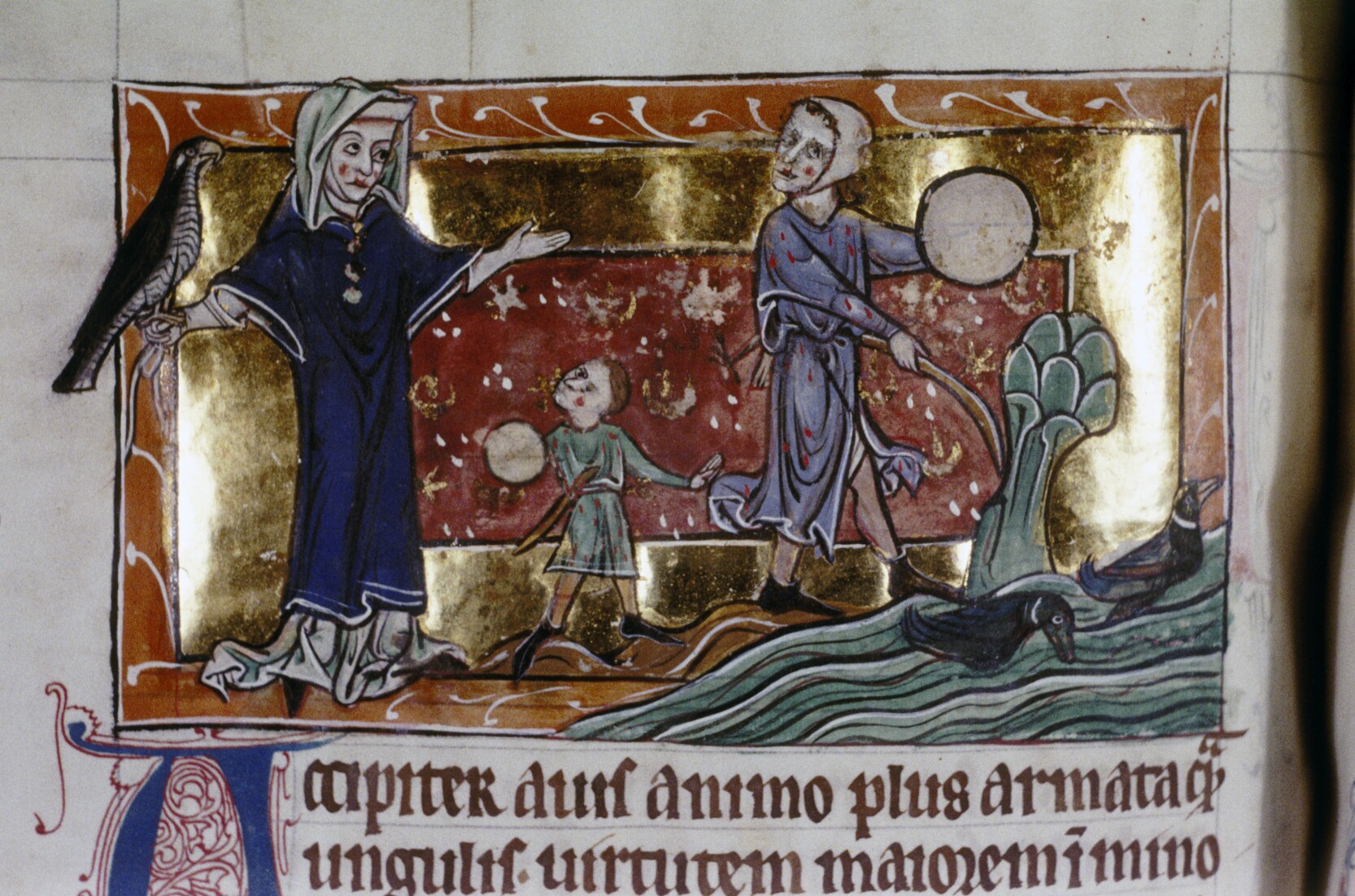
Fig. 1 A woman with a sparrowhawk on her right hand pointing to two beaters, from a mid-thirteenth century bestiary.
Bodleian Library MS. Bodl. 764, fol. 76v.
As Baratay has long argued, ethology is a valuable resource to help place nonhuman animals at the centre of a historical enquiry and interpret them as unique individuals, as long as we avoid generating “intemporal portraits” of animals.11 Historians can use ethology to locate the behavioural plasticity of animals in time, for example their adaptation to the advantages offered by close habitation to humans. Marijane Osborn draws on research into the life cycle of ravens and their distinctive culture in Iceland to interpret references to ravens in early Germanic art and poetry. She notes that young explorer ravens are “opportunistic omnivores” and thus would be aptly bleak signs of human carnage when circling battlefields. But these young birds should be distinguished from the mature half-tame pairs that were commonly attached to rural Icelandic homesteads and fed scraps by farmers. At this later stage in their life cycle the raven could act as a symbol of the home, and thus rest after warfare. At the end of Beowulf the bird is evoked as the “blithe-hearted” raven that “bodes heaven’s joy”, signalling that the violent, uncanny events of the earlier part of the poem are now over.12
Ecological and ethological models can also contribute to important questions about historical extinctions and invasions of species across large scales of time. Individual animals were under the entangled influence of the biological and the environmental.13 The question of why the wolf was exterminated in medieval England and not elsewhere in Europe is answered by Aleks Pluskowski, with reference to these models combined with an understanding of medieval aristocratic hunting cultures. He suggests that wolves’ relationship with deer was much more important to their persecution than their attacks on sheep, even though the latter activity is common in religious iconography. After the Norman conquest, the new ruling class in England established a hunting culture around the control and management of significant herds of deer in habitats that undoubtedly attracted wolves. At this point wolves became systematically persecuted in response to their competition with human hunters for this culturally prestigious quarry.14
Although it is important to emphasize the independence of animal histories from human histories, as Baratay declares, it is equally necessary to acknowledge their entanglement to keep readers attentive to the current biodiversity crisis and avoid ecological amnesia. Historians can use animal histories to draw attention to environmental degradation at local, regional, and global scales. We can help readers notice the ghosts of what has been lost.15 This strategy counters the psychological and sociological phenomenon of shifting baseline syndrome, the tendency of each generation to imagine that the environmental conditions at the edge of their own memories represent the way the world used to be.16 In the absence of deeper historical knowledge of past environments and species populations, people’s accepted thresholds for environmental conditions will continually be lowered. Of course, as is well known, historical precedent (real, exaggerated, or fabricated) can be used to justify slaughter as well as evoke loss. For example, medieval hunting of whales is part of Norway’s justification for minke whale hunting.17
Some animal behaviour witnessed in medieval Europe is now becoming vanishingly rare. Despite more limited technology, medieval opportunities to observe whales from the surface of the sea were better: cetacean populations were ten times greater than they are today. The thirteenth-century encyclopaedist Thomas of Cantimpré observed (or more likely learnt from fishermen) that young whales depended on their mothers for a long time, and correctly noted that they reached adulthood (sexual maturity) at around ten years.18 He is likely to have been referring to the North Atlantic right whale, which is a slow surface-swimming whale that is not particularly aggressive. Whale hunting intensified in the eleventh century as part of a rapid growth in marine fishing to meet the demand of growing urban populations, with this species already becoming scarce around the coasts of Western Europe by the 1500s.
It is easier to identify how medieval populations, such as those of whales, differ from modern populations in terms of number and size than it is in behaviour.19 In the age of the Anthropocene, it is anthropogenic change that is visible at scale. Changes in animal behaviour over time are often particularly notable in animals who have learnt to adapt to human activity, sometimes by decreasing their visibility. Many species have become more nocturnal to avoid contact with humans.20 For examples of behavioural flexibility in medieval Europe, I turn to the red fox and the domestic cat (and the latter will get particular attention, as an homage to Baratay’s wonderful book, Cultures félines (XVIIIᵉ–XXIᵉ siècles): Les chats créent leur histoire). In modern ethological terms, these animals (both as a species and some particularly successful individuals) possess three important attributes to thrive in human, and especially urban, environments: neophilia, boldness, and behavioural flexibility.21
Éric Baratay’s work has long encouraged historians to move beyond human-centred narratives: to reconstruct an animal’s own perspective, lived experience and life stages as far as possible, even though we can never fully know an animal’s interiority.22 As discussed in the above examples, writing the history of animals requires interdisciplinary methods to recover traces of animals in diverse sources, and to pay attention to animals as actors who make choices, resist, adapt, and try to shape their fates, even under the constrained conditions of co-existing with humans.
In medieval Europe, deforestation greatly reduced the range of wolves (and other apex predators such as bears and lynxes) but red foxes were better able to adapt to human ecosystems and increasing human contact. As well as targeting rodents, rabbits, and hares of their original wild habitats, medieval foxes boldly broke into farmyards and stole chickens, ducks, and geese (Fig. 2).23 A common medieval image of foxes depicted them fleeing from a woman carrying a distaff (a staff onto which wool or flax was wound for spinning) with a goose in their mouth. The fox’s behavioural flexibility as he moved between the wild and human worlds is reflected in the popular medieval literary character of Reynard the fox, who is alternately depicted with vulpine realism and as an anthropomorphic trickster. Reynard’s cunning (or behavioural flexibility) allows him to defeat the stronger wolf, and to navigate a human world in which dogs are well established (Fig. 3). In stories of Reynard and the wolf Ysengrim, the fox escapes the wrath of humans through his cunning, while the wolf’s greater size, strength, and ferocity generally provoke a violent human response.24
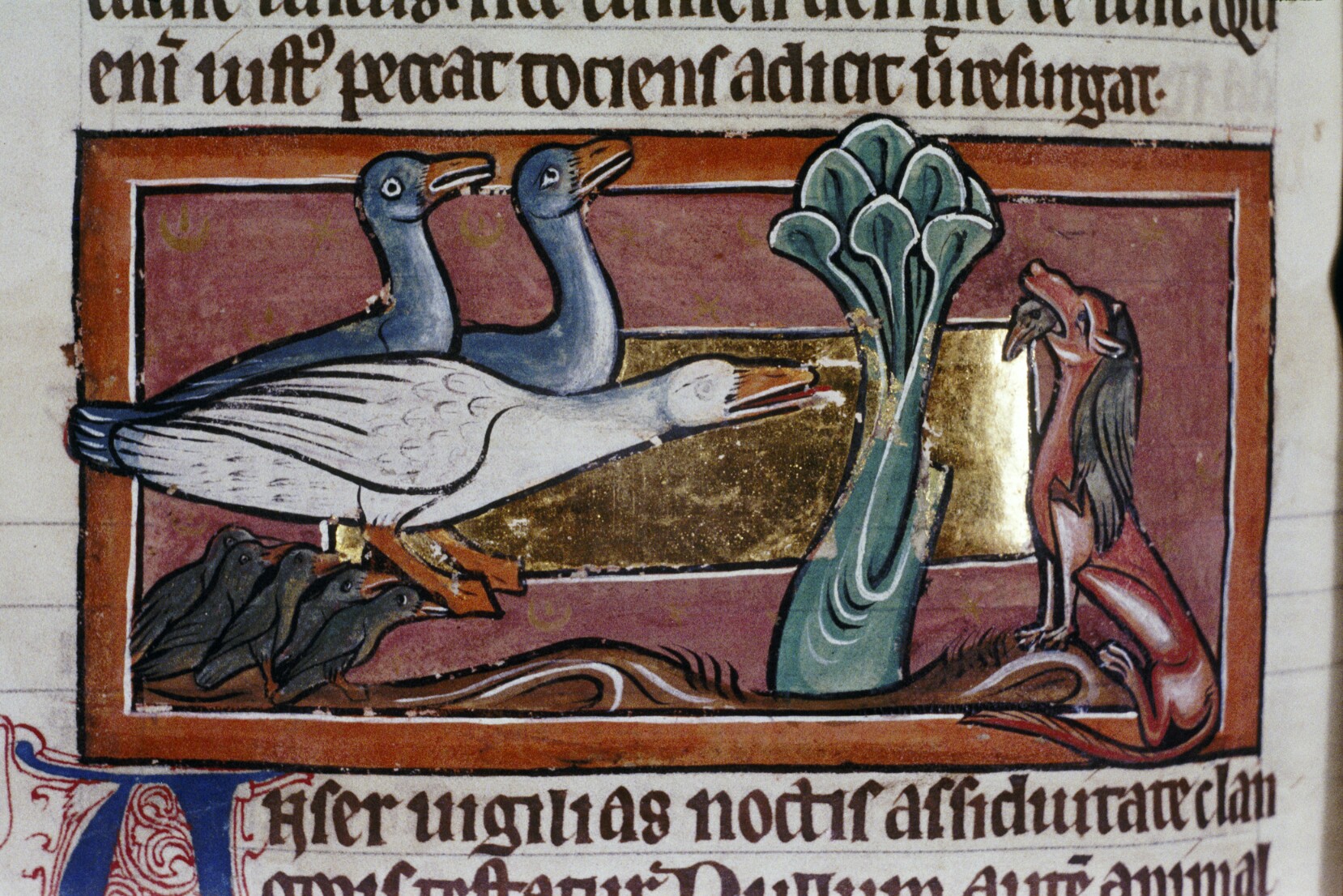
Fig. 2 A fox targeting farmyard birds. From a mid-thirteenth century bestiary. Oxford, Bodleian Library MS. Bodl. 764, fol. 83v.
https://digital.bodleian.ox.ac.uk/objects/ecf96804-a514-4adc-8779-2dbc4e4b2f1e/
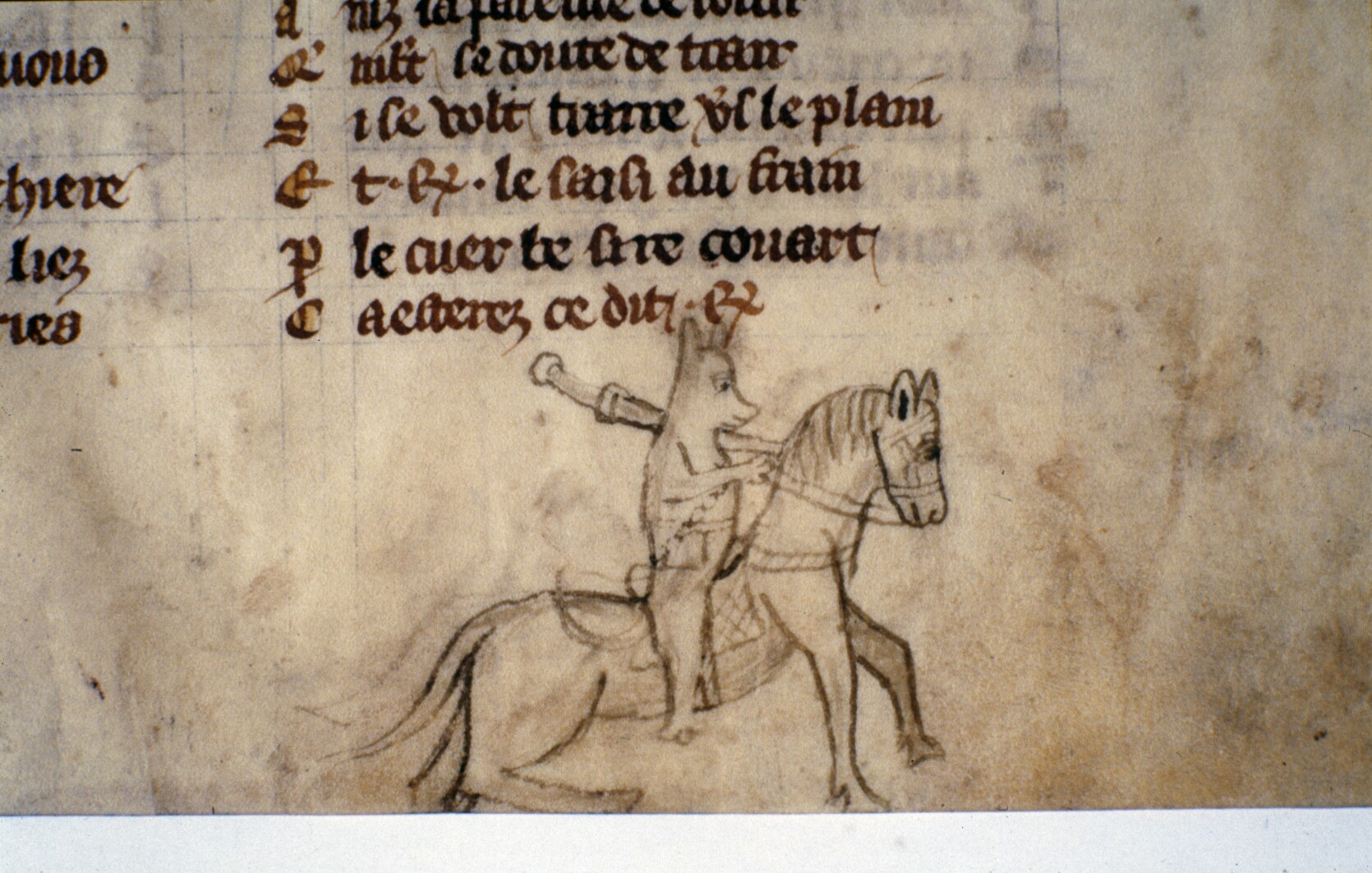
Fig. 3 Reynard the fox on horseback. An illustration accompanying the Romance of Reynard the Fox and Isengrin. Oxford, Bodleian Library MS. Douce 360 (1339), fol. 10r.
https://digital.bodleian.ox.ac.uk/objects/fd4b8844-8100-4794-a0bb-fb32acd6bf36/
Medieval sources provide an interesting perspective on the entangled cultures of cats as hunters of vermin and as human companions. On a historical scale we can see how medieval culture increased the opportunities for both, intensifying cats’ entanglement with human society. A particularly valuable source is the seventh to eighth-century Irish legal tract known as the Catṡlechta (“cat-sections”) which demonstrates (alongside archaeological evidence) that cats were well cared-for in medieval Ireland, particularly as house cats.25 Breone is the type of cat with the highest value in the tract (three cows) because she purrs as well as protects farm buildings from mice. Another type of cat is Baircne, which sleeps on pillows beside women, while Meone is a pantry cat, and Rincne is a cat for children. Children and cats rarely appear together in medieval sources (unlike cats and women or cats and clerics), but in this text cats are said to be noble things for children to play with, who will cause sorrow if they are absent or taken away. Individual cats used social signals in their interactions with humans and other animals in their environment to express emotional states and to shape their fates. Some medieval observers record cats purring, meowing, cleaning, raising their tails, and presenting their rears (Fig. 4).
In late Medieval Europe, cats benefitted from their suitability for religious establishments. Many medieval monasteries and nunneries banned the keeping of companion animals because emotional attachments were thought to be a distraction from God and religious duties.26 But cats were usually an exception to this rule, as their practical value was acknowledged, especially in institutions with Scriptoria (rooms where scribes copied and illuminated manuscripts) — parchment and book bindings were vulnerable to rodents (Fig. 5).27 The famous ninth-century Irish poem Pangur Bán praises the kinship between an Irish monk writing a manuscript and his cat who is hunting a mouse. They share a patient, shrewd, and parallel stalking of the quarry of words and mice. In modern psychological terms this might be interpreted as personality convergence between a human and their companion animal.
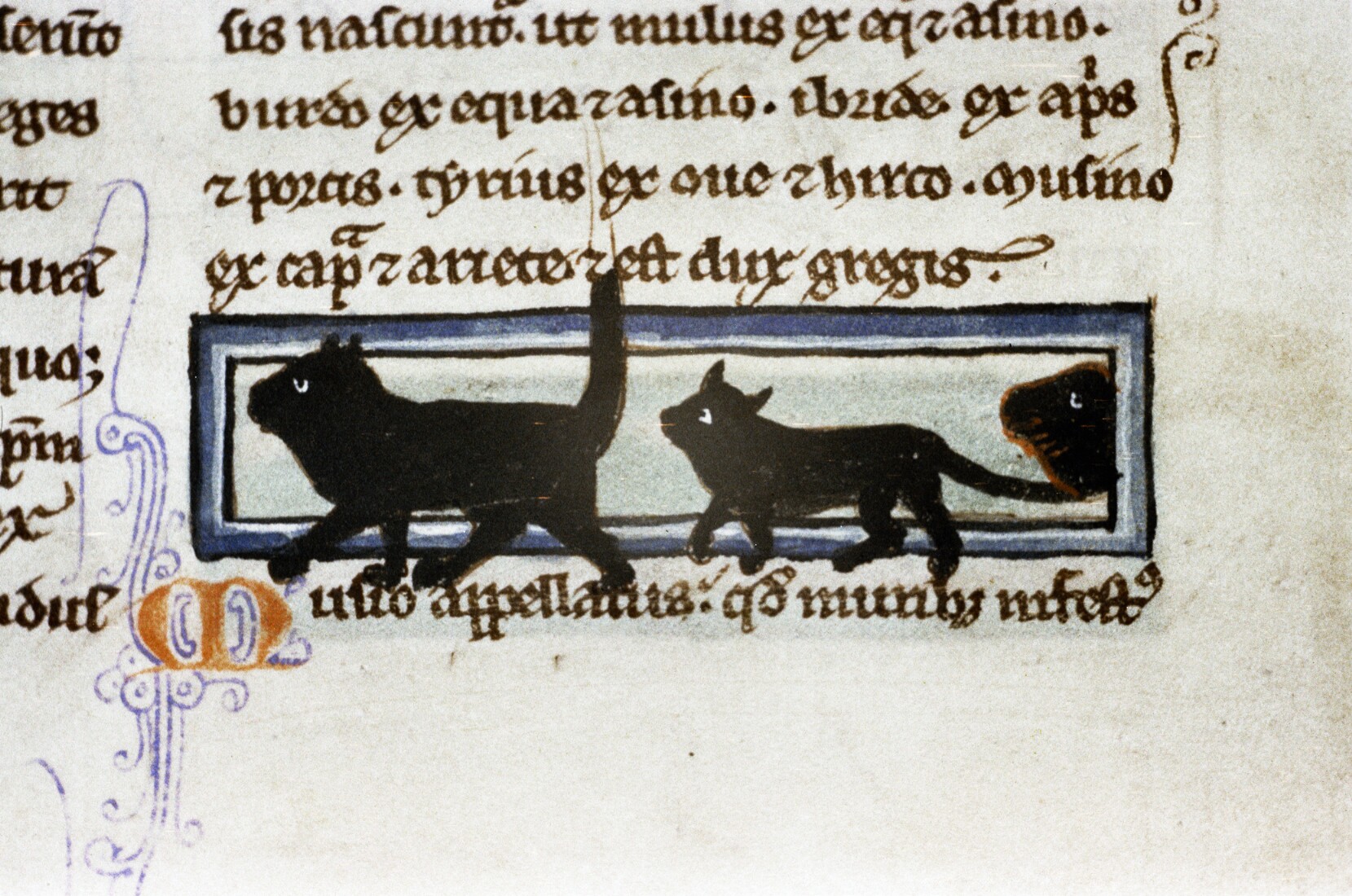
Fig. 4 A cat and kittens from the Liber de naturis bestiarum. Oxford, Bodleian Library MS. Bodley 533 (mid-thirteenth century), fol. 13r.
https://digital.bodleian.ox.ac.uk/objects/36652b63-d9b1-4480-a88b-769d558bf238/
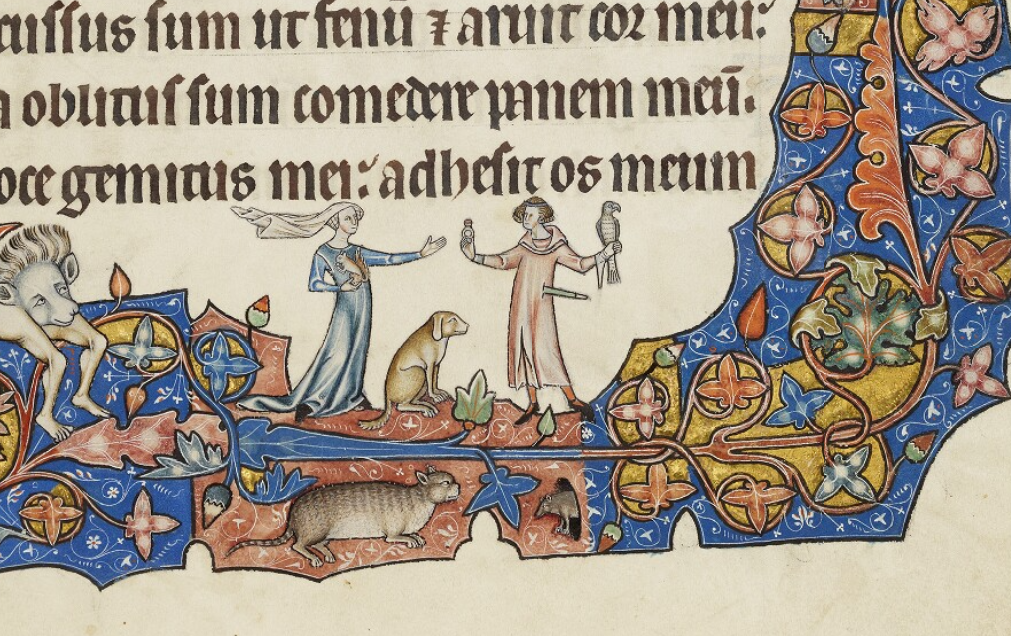
Fig. 5 Cat and mouse from the Ormsby Psalter. Bodleian Library MS. Douce 366 (ca. 1325), fol. 131r.
https://digital.bodleian.ox.ac.uk/objects/34a6037b-12e8-4b12-8920-26c33914fe0e/
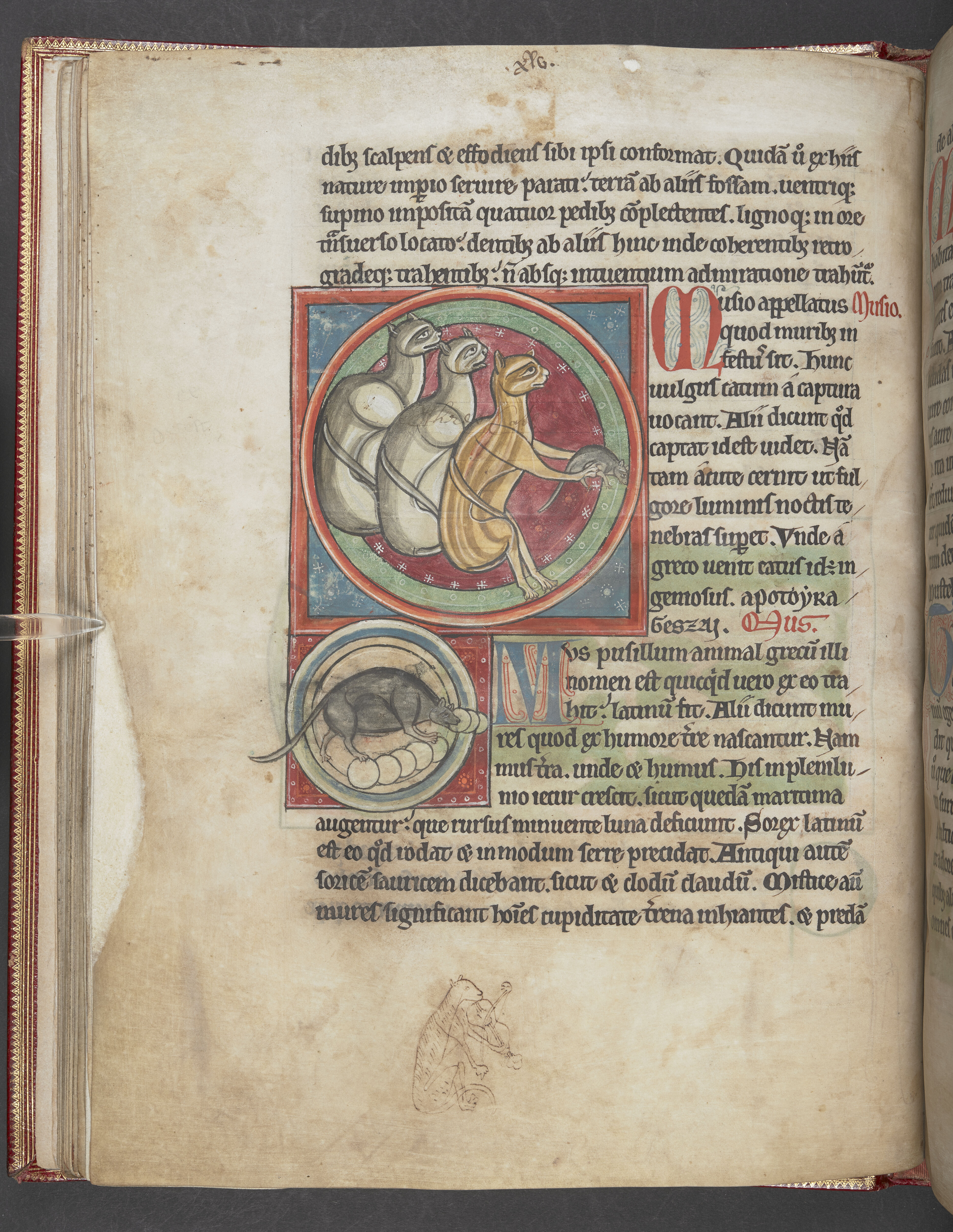
Fig. 6 Cats protecting the communion wafer from rats. (Plus a cat playing the fiddle.)
British Library Harley MS 4751 (late-twelfth/early thirteenth century), fol. 30v.
https://bl.digirati.io/iiif/ark:/81055/vdc_100056056799.0x000001?manifest=https://bl.digirati.io/iiif/ark:/81055/vdc_100056056799.0x000001
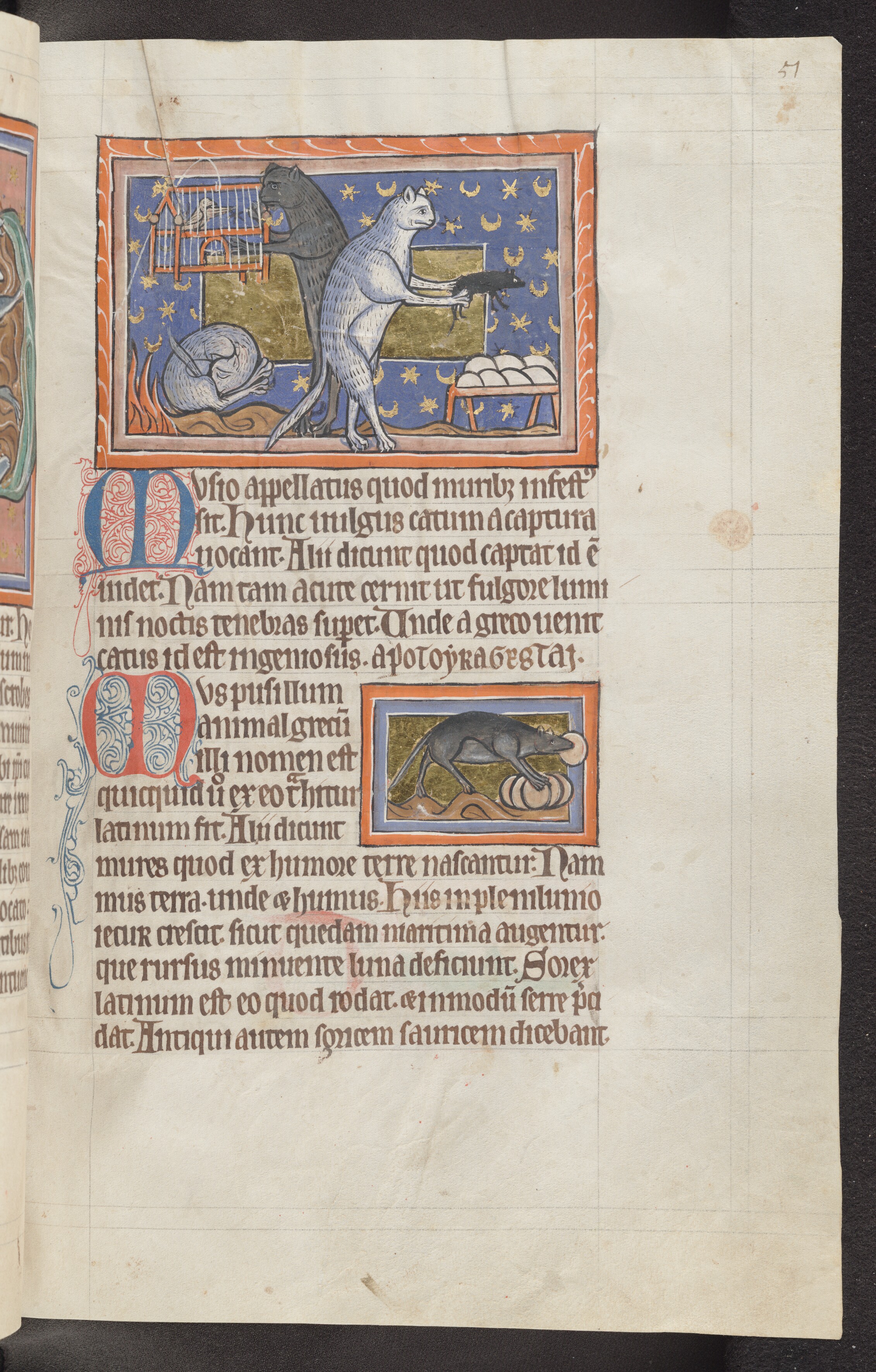
Fig. 7 Cats, rats, and communion wafers, from a mid-thirteenth-century bestiary.
Oxford, Bodleian Library MS. Bodl. 764, fol. 51r.
https://digital.bodleian.ox.ac.uk/objects/e6ad6426-6ff5-4c33-a078-ca518b36ca49/
Medieval sources often indicate affectionate relationships between nuns (and other women) and cats, demonstrating an early example of the significant role that women have played in the progressive modification of human relations with cats.28 For example, a thirteenth-century handbook for anchoresses (religious women who chose to enclose themselves permanently in cells attached to churches) states that they are permitted to have a single cat companion, who is perhaps able to enter and leave by the window permitted in a cell for food and other goods to be brought in.29 In view of the shared human–feline spaces in religious buildings (often adapted to cats with the insertion of cat holes in doors), and the increasing presence of commercial scriptoria in medieval cities (from the thirteenth century), it is unsurprising how often images of cats appear in medieval manuscripts, and that they sometimes left urine stains and muddy paw prints on the pages.30 In 1420, a scribe in the city of Deventer complained that not only had a cat peed in the book he was writing, but that this action had encouraged other cats to do the same, attesting both to the presence of several cats at his workplace but also to his observation of their mutual behaviour.
Attitudes to cats varied across space as well as time. In medieval Europe, domestic cats were hunted for their fur but not purpose bred for this, either because of the fur’s low value or the cat’s high cultural worth. In spite of the many medieval stories of violence done to cats, and their association with the devil in religious stories, some medieval people seem to have found the juxtaposition between wearing the fur of cats and appreciating their companionship jarring. Mattias Toplak speculates that the unusual absence of cat fur trading goods or dress accessories in the archaeological record of medieval Birka, a wealthy fur trading town in late Viking Age Scandinavia (c. AD 750–975), might be explained by the high esteem in which domesticated cats were held in this town.31 It is interesting that texts depicting how to use the body parts of cats (among other animals) for medical purposes have images of particularly ugly and unpleasant-looking cats, suggesting that the artist is deliberately disassociating the animals killed for (ineffective) medical purposes from house cats that were affectionately played with and stroked.32 This story of deflection from the unpleasant realities of medical and scientific experimentation on animals is familiar to modern audiences.
Historical sources from medieval Europe indicate large numbers of house cats, with images suggesting that two to four cats in a household was commonplace.33 An anecdote about one neighbour threatening another’s cat, who eats at his house, is suggestive of both feline opportunism and the attachment of humans to their companions, since the neighbour pays him to release the cat.34 In fact, many texts simply assume that a well-to-do household will have at least one cat and one dog. When cats are depicted in medieval domestic interiors they are usually presented as alert animals calmly observing their surroundings, often positioned near the attractive settings of a food-laden table or a hearth fire.35
This paper has suggested that medieval Europe offers rich evidence for the project Baratay sets before historians of animals, and that medieval history, as a discipline, has particular contributions to make to it. Medieval sources do not merely supplement the historical record of animal behaviour; they actively complicate it, by encompassing such diverse perspectives as the emotional interiority attributed to animals by natural philosophers, the close observational practice cultivated by falconry manuals and hunting treatises, the behavioural repertoires recorded in Irish legal tracts, and the testimony of scribes irritated by the cats who shared their workspaces. Taken together, these represent a form of attentiveness to animals that post-Cartesian historiography has sometimes overlooked. Recovering this attentiveness is not an exercise in nostalgia but a corrective to the assumption that earlier periods offer only silence or fantasy where animals are concerned.
This paper has also sought to engage directly with one of the central tensions in Baratay’s broader programme. Baratay calls for historians to attend to the independence of animal histories from human ones, to resist the gravity of anthropocentrism that pulls every animal story back into a narrative about human desires and anxieties. This call deserves to be heeded. And yet, as the examples gathered here suggest, it is precisely at the points of entanglement between human and animal histories that some of the most revealing evidence is generated: the sparrowhawk who must be taught to love the austringer; the fox whose cunning is legible only against the backdrop of a landscape reshaped by deforestation and elite hunting culture; the cat who migrates from the household pantry to the anchoress’s cell to commercial urban scriptoria as medieval institutions evolved. These animals are not reducible to their relations with humans, but their histories are inseparable from those relations, since it is human pressures and structures that shape the conditions under which the agency of many nonhuman animals is exercised.
Notes
Baratay, “Scale: Temporal”, 98.
Species itself operates as a scalar category, one that shapes the discipline of ethology, which I discuss below. My response, however, focuses on historical scales: their capacity to yield comparative insights into contemporary problems, and the importance of attending to individual historical animal experience alongside the broader scales of species and history.
Toivanen, “Marking the Boundaries”.
Adelard of Bath, Conversations, 177.
See, for example, Steel, “Huntings of the Hare”; Vitz, “Animal and Human Emotions”.
Anon., “By a forest as I gan fare” [“The Hunted Hare”], in Robbins, Secular Lyrics, 107–8; Anon., “A Sparrowhawk’s Lament” [“As I me walked in one morning”], in Chambers and Sidgwick, Early English Lyrics, 150.
While both sexes of birds of prey were flown by medieval falconers, they generally preferred females for hunting because they were larger and more powerful.
Greco and Rose, Good Wife’s Guide, 234.
Grímnismál, verse 44.
Scott-Macnab, “Names of All Manner of Hounds”.
I use “ethology” in Baratay’s expansive sense that includes the biological, ecological, and cognitive sciences. See Baratay, Feline Cultures, 52–55.
Osborn, “Ravens on the Lejre Throne”.
Baratay, Feline Cultures, 222.
Pluskowski, “The Wolf”.
“Ghosts” signify the absence and invisibility of species, e.g. through extinction. Tsing et al., Arts of Living.
Soga and Gaston, “Shifting Baseline Syndrome”. The term “shifting baseline syndrome” was first coined by marine biologist Daniel Pauly in 1995 in the context of fisheries science.
Szabo, Monstrous Fishes, 67.
Thomas of Cantimpré, Liber de natura rerum, 6.6; 6.40; 7.19.
Szabo, Monstrous Fishes, 3; 79. The North Atlantic Right whale is soon likely to be extinct everywhere. In the 2024 breeding season (November to April) researchers identified only nineteen calves.
Gaynor et al. “Influence of Human Disturbance”.
See Barrett et al., “Cognition of ‘Nuisance’ Species”.
See Baratay, Biographies animales; Baratay, Aux sources de l’histoire animale.
Wackers, Introducing the Medieval Fox, 5.
For example, the sheep-raid (the French Roman de Renart, Branche VI; there are also parallels in the Low German Reynke de Vos) and the Mill episode (Heinrich der Glüchezare, Reinhart Fuchs, vv. 708–60, ed. Matthias Lexer).
Edited and translated in Murray, “Catṡlechta”. See also McCormick, “Domesticated Cat”.
In medieval Europe, “companion animals” fulfil the modern criteria of this category: the animal has no function other than to offer companionship, is an object of emotional attachment, and is treated as a member of the household. In these respects, companionship, domestication, and affect do not operate differently from later periods. Indeed, the medieval recognition of emotional complexity in animals discussed in this paper makes it philosophically more plausible than in any post-Cartesian framework that companion animals were understood as reciprocating their owner’s attachment — or choosing not to, since they were thought to possess agency in this regard. See Walker-Meikle, Medieval Cats; Toivanen, “Marking the Boundaries”.
Some medieval images go further, underlining the cats’ significant and sacred duty to protect the holy communion wafer from rodents (Figs. 6 and 7).
Baratay, Feline Cultures, 53. Most owners of cats specified in medieval texts are members of religious orders or secular women.
The Ancrene Wisse (early thirteenth century).
See examples discussed in Porck, “Paws, Pee and Mice”; Jackson and Thomas, “Cats, get off the page!”.
Toplak, “Warrior and the Cat”.
See, for example, Sextus Placitus, De medicina ex animalibus, British Library, Sloane MS 1975, folio 86v; or Sextus Placitus, Liber medicinae ex animalibus, British Library, Harley MS 1585, fol. 74r.
See, for example, the images in Walker-Meikle, Medieval Cats; and the cat gallery at https://bestiary.ca/beasts/beastgallery213.htm.
“TC0174, Compilatio singularis exemplorum.” ThEMA: Thesaurus Exemplorum Medii Aevi, https://thema.huma-num.fr/collections/TC0174. Accessed 14 September 2025.
Walker-Meikle, Medieval Cats.
Works Cited
Adelard of Bath. Conversations with His Nephew: On the Same and the Different, Questions on Natural Science, and on Birds. Edited and translated by Charles Burnett. Cambridge University Press, 1998.
Baratay, Éric, ed. Aux sources de l’histoire animale. Éditions de la Sorbonne, 2019.
Baratay, Éric. Biographies animales: Des vies retrouvées. Seuil, 2017.
Baratay, Éric. Feline Cultures: Cats Create Their History. Translated by Drew S. Burk. University of Georgia Press, 2024.
Barrett, Lisa P., Lauren A. Stanton, and Sarah Benson-Amram. “The Cognition of ‘Nuisance’ Species.” Animal Behaviour 147 (2019): 167–77. https://doi.org/10.1016/j.anbehav.2018.05.005.
Chambers, E.K. and F. Sidgwick, eds. Early English Lyrics. A.H. Bullen, 1907.
Gaynor, Kaitlyn M., Cheryl E. Hojnowski, Neil H. Carter, and Justin S. Brashares. “The Influence of Human Disturbance on Wildlife Nocturnality.” Science 360, no. 6394 (2018): 1232–35. https://doi.org/10.1126/science.aar7121.
Greco, Gina L., and Christine M. Rose, translators. The Good Wife’s Guide: Le Ménagier de Paris: A Medieval Household Book. Cornell University Press, 2009.
Jackson, Eleanor and Kate Thomas. “Cats, get off the page!” British Library Medieval Manuscripts Blog 27 December 2018. https://blogs-archive.bl.uk/digitisedmanuscripts/2018/12/cats-get-off-the-page.html.
McCormick, Finbar. “The Domesticated Cat in Early Christian and Medieval Ireland.” In Keimelia: Studies in Medieval Archaeology and History in Memory of Tom Delaney, edited by Gearóid Mac Niocaill and Patrick F. Wallace, 218–28. Galway University Press, 1988.
Murray, Kevin. “Catṡlechta and Other Medieval Legal Material Relating to Cats.” Celtica 25 (2007): 143–59.
Osborn, Marijane. “The Ravens on the Lejre Throne: Avian Identifiers, Odin at Home, Farm Ravens.” In Representing Beasts in Early Medieval England and Scandinavia, edited by Michael D. J. Bintley and Thomas J. T. Williams, 94–112. Boydell & Brewer, 2015.
Pluskowski, Aleksander G. “The Wolf.” In Extinctions and Invasions: A Social History of British Fauna, edited by Terry O’Connor and Naomi Sykes, 68–74. Windgather Press, 2010.
Porck, Thijs. “Paws, Pee and Mice: Cats among Medieval Manuscripts.” medievalfragments, 22 February 2013. https://medievalfragments.wordpress.com/2013/02/22/paws-pee-and-mice-cats-among-medieval-manuscripts/.
Robbins, Rossell Hope, ed. Secular Lyrics of the XIVth and XVth Centuries. 2nd ed. Clarendon Press, 1955.
Scott-Macnab, David. “The Names of All Manner of Hounds: A Unique Inventory in a Fifteenth-Century Manuscript.” Viator 44, no. 3 (2013): 339–68. https://doi.org/10.1484/J.VIATOR.1.103488.
Soga, Masashi, and Kevin J. Gaston. “Shifting Baseline Syndrome: Causes, Consequences, and Implications.” Frontiers in Ecology and the Environment 16, no. 4 (2018): 222–30. https://doi.org/10.1002/fee.1794.
Steel, Karl. “Huntings of the Hare: The Medieval and Early Modern Poetry of Imperiled Animals.” In The Palgrave Handbook of Animals and Literature, edited by Susan McHugh, Robert McKay, and John Miller, 141–52. Palgrave Macmillan, 2021.
Szabo, Vicki Ellen. Monstrous Fishes and the Mead-Dark Sea: Whaling in the Medieval North Atlantic. Brill, 2008.
Toivanen, Juhana. “Marking the Boundaries: Animals in Medieval Latin Philosophy.” In Animals: A History, edited by Peter Adamson and G. Fey Edwards, 121–50. Oxford University Press, 2018.
Toplak, Matthias S. “The Warrior and the Cat: A Re-Evaluation of the Roles of Domestic Cats in Viking Age Scandinavia.” Current Swedish Archaeology 27, no. 1 (2019): 213–45. https://doi.org/10.37718/CSA.2019.10.
Tsing, Anna Lowenhaupt, Heather Anne Swanson, Elaine Gan, and Nils Bubandt, eds. Arts of Living on a Damaged Planet: Ghosts and Monsters of the Anthropocene. University of Minnesota Press, 2017.
Vitz, Evelyn Birge. “Animal and Human Emotions in Early Branches of Le Roman de Renart.” In L’Humain et l’Animal dans la France médiévale (XIIe–XVe s.), edited by Irène Fabry-Tehranchi and Anna Russakoff, 57–70. Brill, 2014.
Wackers, Paul. Introducing the Medieval Fox. University of Wales Press, 2023.
Walker-Meikle, Kathleen. Medieval Cats. Boydell Press, 2012.