Multispecies Commoning and Uncommoning at Knockvologan
A Response to “Scale Political”
DOI: http://doi.org/10.52537/humanimalia.28266
Keywords: animal philosophy, visual essay, multispecies ethnography, multispecies community, sheep resistance, chicken community, mink solidarity
Eva Meijer is a philosopher, visual artist, writer, and singer-songwriter. They have written over twenty books: novels, philosophical essays, academic texts, poems and columns, including the international best-sellers Animal Languages and Bird Cottage. Their work has been translated into over twenty languages. Recurring themes are language including silence, madness, nonhuman animals, and politics. Meijer is affiliated with the University of Amsterdam as a postdoctoral researcher. They write essays and columns for Dutch newspapers, and are a member of the Multispecies Collective, a multispecies art collective. Meijer co-chairs the Dutch study group for Animal Philosophy. Recent books in English include Multispecies Assemblies (Vine Press, 2025), Multispecies Dialogues: Doing Philosophy with Animals, Children, the Sea and Others (Amsterdam University Press, 2025) and the novel Sea Now (Pereine Press 2025).
Email: e.r.meijer@uva.nl
Humanimalia 16.2 (Summer 2026)
Abstract
This visual essay responds to Donaldson and Kymlicka’s “Scale Political” by mapping different political scales in and around Knockvologan Studio, a space for art, literature, research and nature preservation, on the Isle of Mull (Scotland). Focusing on the agency of nonhuman animals and plants, it shows how different political relations, communities and encounters exist simultaneously in one place. The essay zooms in on nonhuman forms of resistance, solidarity, belonging, and community-building, by looking at the practices of sheep, mink, plants using rocks, and many others. Instead of explicating these different political scales in human words, the essay shows different forms of being and relating. As such, it invites the reader to attend more closely to nonhuman and multispecies forms of meaning-making, beyond human language and existing forms of democracy.
In early spring of 2025 I visited Knockvologan Studio, a space for art, literature, research, and nature preservation, on the Isle of Mull (Scotland).1 The centre was set up in 2016 by Miek Zwamborn, a writer, artist, and translator, and Rutger Emmelkamp, artist, teacher, and program maker, when they were invited to be the guardians of nature reserve Tireragan.
During my time in Knockvologan, I witnessed various forms of nonhuman politics and ways of belonging. Knockvologan, a hamlet consisting of four houses built by humans, and the surrounding area, including Tireragan, are home to many nonhuman communities. On this part of the Isle of Mull there are many scales on which politics takes place, shaped by the agency of different animal individuals and communities.
Nonhuman inhabitants of the space include ravens and golden eagles who live in the mountains, otters in the sea below them, and rooks who had built their nest near the studio where I was staying. On land, there are communities of deer, hares, and many smaller creatures like snails and woodlice — on the last day of my visit the butterflies woke up. The sea and rocks are home to sea mammals, fishes, molluscs like limpets and barnacles, and many others. Sheep, chickens, and cows live close to humans, under circumstances that vary. Some experience a lot of freedom, like the chickens at Knockvologan Studio, and the sheep on the nearby tidal island of Erraid, while others, like the bulls in barns on farms on the island, are confined in small spaces. Most of these domesticated animals are subject to exploitation of some kind. The humans do not aim to live justly with them but to profit from their eggs, meat, or milk. Humans form close relations with dogs and cats, as companions, and/or workers. For example, dogs are used to round up the sheep and cats to catch mice and other rodents.
Humans and other animals in and around Knockvologan all carve out spaces to live under harsh conditions. Their forms of life are sometimes similar and sometimes very different, and yet are connected in many different ways. Plants, fungi, and lichens are also part of these multispecies relations, which are shaped by the landscape in which they are rooted, and the weather. In what follows I portray the acts and scales that play a role in the political life of nonhuman animals, and between humans and other animals. I do so in response to Sue Donaldson and Will Kymlicka’s contribution to this special issue, which proffers an ontological and normative framework for animal political, drawing attention to the different scales on which animal communities (including multispecies communities) structure political life. I focus mainly on nonhuman forms of resistance, solidarity, belonging, and building community. This essay visualizes different scales of being and relating rather than of explicating them all in words. I invite the reader to attend to other forms of meaning-making than their own through looking and reading carefully.
The Scale of Chickens Creating Community
Knockvologan Studio is home to a community of eight chickens and one rooster. They have their own social norms, but also share norms, habits, practices of communication and understanding, food, and space, with the humans (Miek and Rutger, and guests like me). They also communicate with the wild birds and other nonhumans in the area and share habits with them. They play an important role, for example, in the “predator warning networks” that Donaldson and Kymlicka describe: the chickens warn everyone in the area loudly when a harrier approaches (including the songbirds who often visit the garden and share the chickens’ food).
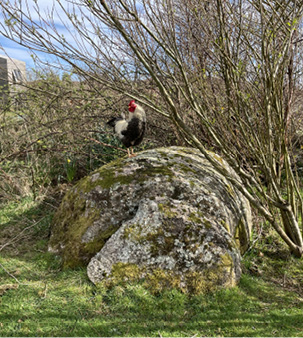
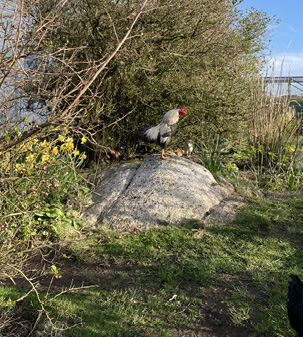
On my first day in Knockvologan, I was struck by the chickens’ use of the space. The rooster, Haan, uses four large boulders to stand on when he crows: his crowing stones (kukelstenen in Dutch).
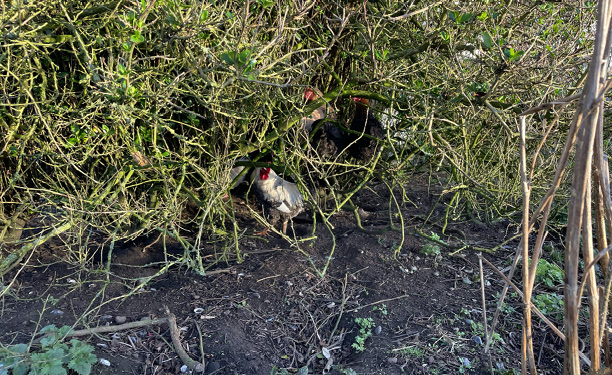
The chickens dig dens in different parts of the garden, to rest in during the day. The dens are warm in the winter and cool in the summer. The chickens use the ones underneath the shower cabin, pictured in the photograph below, when it storms.
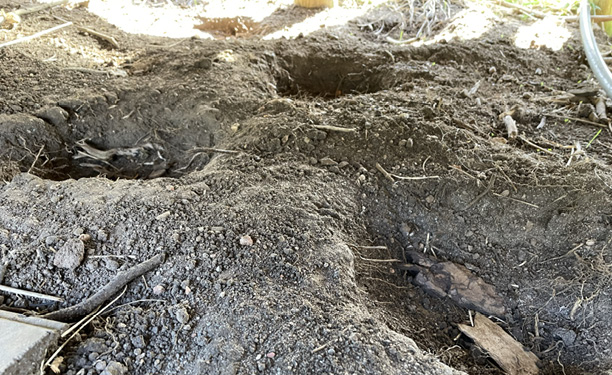
Their dens are respected by the humans, who do not plant anything in or near them. Miek also told me that the chickens taught her and Rutger about certain roots that are especially nutritious by pointing them out to them with their beaks, and about the quality of the soil. The humans do not follow the chickens unquestioningly though: when the chickens point out something, the humans look it up on the internet. They are currently in the transition to recognizing the chickens as full members of a shared community. When they adopted the first group of chickens, they did so for their eggs, but they have now learned how problematic this is, through ongoing conversations with vegan artists and writers who visit the island. The chickens already view the humans as part of their larger community. Through living together, spatial and embodied interactions connect and shape different human and chicken scales. These include their shared life-world in the garden (including co-design of the space), human scientific and artistic practice informed by chicken knowledge (reaching out well beyond the Isle of Mull), bird networks of communication, and other scales that are not all comprehensible to humans.
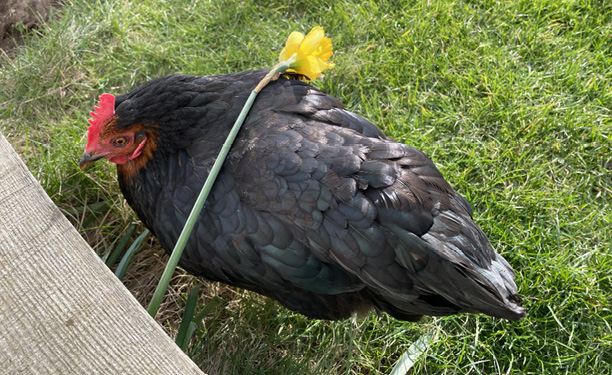
This is Grootmoeder (Grandmother), the matriarch of the group. She was the most eager to get to know me; she came up to me when I was outside and felt comfortable sitting close to me. She and Haan (which means Rooster) are the first to explore new food and situations. For instance, Grootmoeder has a great technique for eating small seeds from a plate: by tapping the plate with her beak, she makes the seeds jump and then grabs them out of the air.
The Scale of Sheep Resistance
On the third of April I joined Miek, farmer John, the three border collies Dan, Jill, and Sparky, Miek’s neighbour Judy, and a group of around ten other volunteers to round up the sheep on Erraid. This round up takes place four to five times a year, when the sheep need to be vaccinated and treated for worms and ticks. It works as follows: the humans form a long line on the land, with John, Dan, Jill, and Sparky on the outside, and walk slowly like the hand of a clock over half of the island to direct the sheep in the right direction. The terrain is quite rocky and wild, and the sheep and dogs are much more agile in running up the rocks than the humans. Farmer John has rounded up sheep like this for decades. According to Miek, he is one of the last humans who still does it in this way — most farmers now use quad bikes.
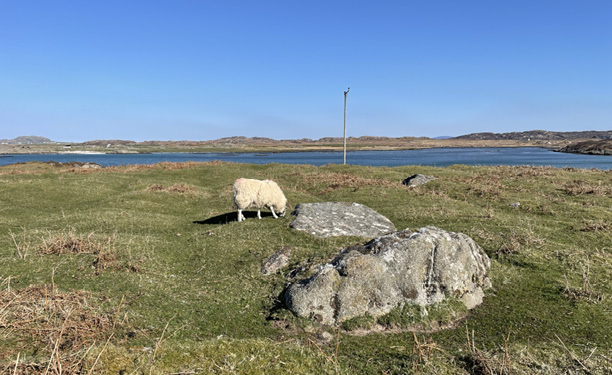
The sheep who live on this island are subject to human domination and exploitation, especially the rams who are taken away from the community when they are eight months old and brought to the mainland to be killed and eaten. The ewes, however, have the opportunity to form a community and live relatively autonomous lives. They have much knowledge about the island and how to survive. In winter, they eat seaweed in the morning to get the nutrients they need (Marino and Merskin note that sheep are good botanists; on Erraid they have the chance to practice this).2 In spring, they know where to go to lamb. The island is their land, but the humans see it — and the lives of the sheep — as human property. Human and ovine understandings of the land sometimes clash, such as during the round-up of the sheep.
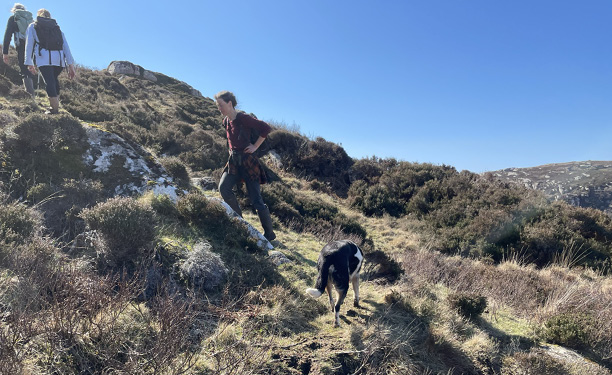
Walking up the hill with Sparky, Miek, and two of the volunteers.
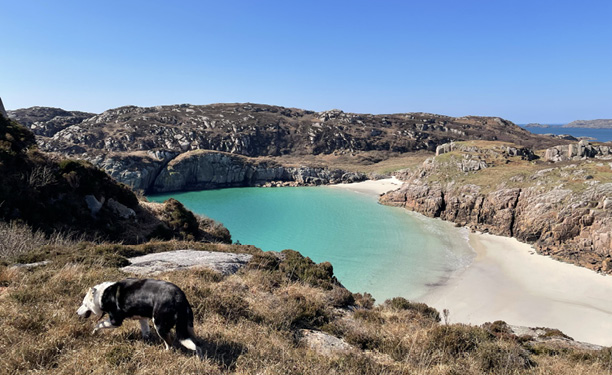
In this picture you see Jill on one of the rocky parts of our walk. The sheep who live here can experience this view. Humans do not often consider other animals capable of wonder and aesthetic imagination, yet many animals are. Most nonhuman animals never get to experience beauty, especially those who live in captivity in industrial farming, labs, and elsewhere. But here they do (see also the final photograph).
I joined the round-up because I was interested in sheep resistance, which I see as a political practice that we do not yet know much about because of the way sheep are stereotyped. Sheep have a reputation of being docile and sullen — in fact, when I looked up translations of the Dutch word sullig (meaning naïve or gullible), I got “sheepish”. (Dutch also has a literal translation of sheepish, “schaapachtig”.) This form of discrimination against sheep is deeply rooted in our societies and scientific systems, and has shaped how humans in Western societies view them.3 It is amplified by the ways in which sheep are forced to live. On small, fenced meadows with only plain grass, their options for agency and choice are severely limited, which affects the ways in which they can express and develop themselves, build a community and friendships with others, or learn to read the land. On Mull the situation is different. Sheep can develop themselves individually and communally, and express this in different ways. Resistance is a form of political expression that is easy for humans to understand.
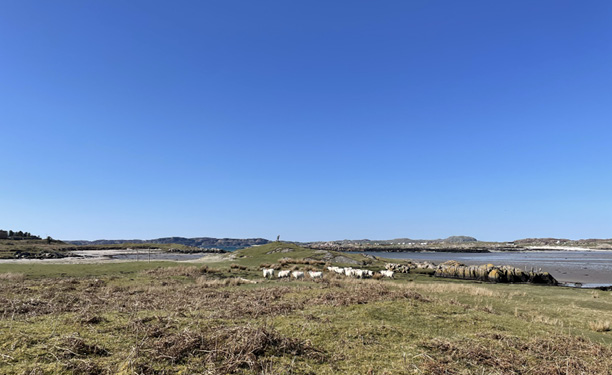
One form of ovine resistance I witnessed was an escape from the humans. The island’s sheep know their land well, including the spots where they know that chances of getting away during the round up are high. A group of six managed to escape early on in one of these areas, which the humans know too. When I took the photograph above, three of them had tried to escape. They wanted to stay with another group of sheep who live on the beach of Mull and with whom they have formed a community (during low tide, the sheep can walk to the other island over the beach). They did not get far; the humans anticipated their attempt and outran them. But they tried. Other sheep hid — the island is covered with bushes, and I was told the humans never manage to find the whole group. Marino and Merskin write that sheep have good spatial memory, something that became clear to me as I watched them.4 The maps in their minds connect the scale of the land on which they live to the scale of human domination over them.
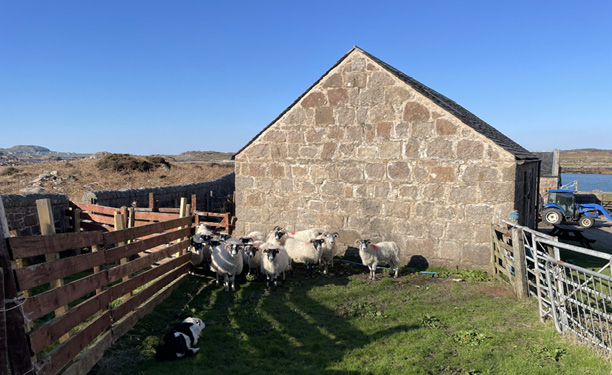
The sheep also resist their vaccination and worm/tick treatment, in various ways. First, they try to run away when the dogs force them to move into the small wooden enclosure where they receive the treatment. Then, when they are in the enclosure, they try to wriggle out of the hands of the humans, turn their heads and bodies the other way, and stay so close to others that the humans cannot catch them. The humans win because they have — and use — more force, but the sheep do not stop resisting. The techniques and tools the humans employ reflect the animals’ agency. The humans use their voices, gestures, physical contact, dogs, enclosures, fences, and physical violence like grabbing and holding the sheep against their will. As Dinesh Wadiwel argues in relation to fish-hooks,5 which are created in anticipation of fish resistance, the sheep’s resistance is reflected in these human acts and material interventions.
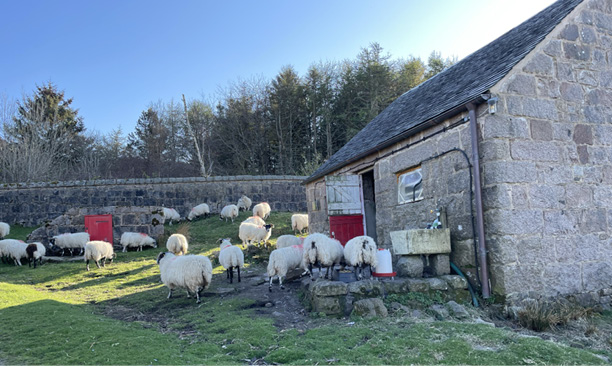
After the treatment, the sheep immediately left the enclosure and returned to their home. Some of them used the opportunity to eat from the chickens’ food.
While there is not much research into the political agency of sheep or the democratic aspects of their communities, the sheep I met are clearly part of what Donaldson and Kymlicka describe as a “norm-governed community” who “establish relatively peaceful, secure and cooperative group life in ways that are seen as legitimate by group members”.6 Humans on the island recognize their desire for freedom, but they are not taken seriously as co-inhabitants of the land. Here, the human scales of property and knowledge clash with those of the sheep, who have their own ideas about what belongs to whom.
The Scale of Plants Using Stones as Tools
On my first day on the island, Miek showed me the beach. I was deeply moved by the colours and shapes of the rocks and sea, and by all the beings who lived on and near them. During this outing, I noticed that seaweeds use stones to anchor themselves, which suddenly looked to me like a form of tool use.
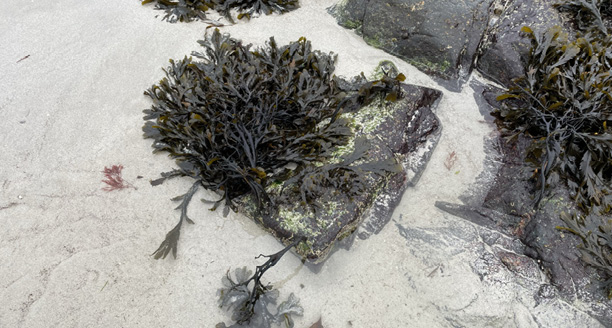
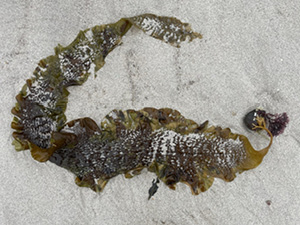
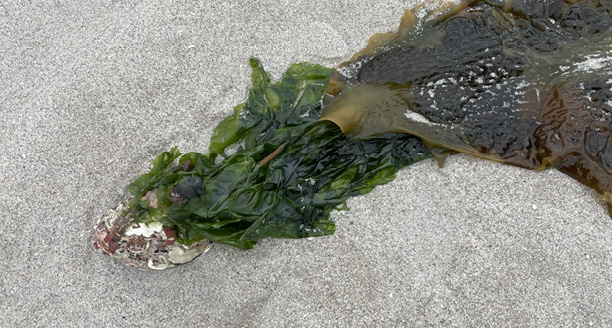
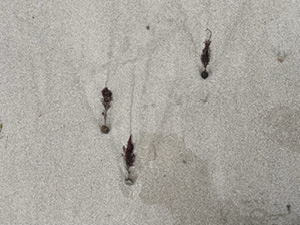
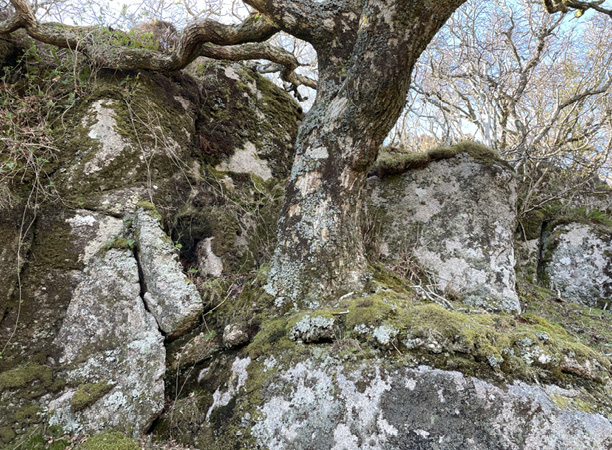
This opened my eyes to other ways in which plants use stones and rocks, such as the trees who use rocks to grow on the side of the mountain. This kind of life would not be possible without the assistance of the stones and rocks, because of the force of the wind.
In The Light Eaters, Zoë Schlanger draws attention to the fact that plant scientists in Western frameworks often ask the wrong questions.7 On example is the neglect of the plants’ behaviour. An emphasis on explanations of plant acts in terms of evolutionary use has long overshadowed looking at what they do. Schlanger writes that biologist Susan Dudley intervened in this script, by looking at plants’ behaviour in her study of their social lives. By changing the question, Dudley found out that many species recognize not only themselves but also their kin.8
Tool use is a form of behaviour, and a lens through which I saw plant acts differently. After my encounter with the seaweeds, I began to see it everywhere.9
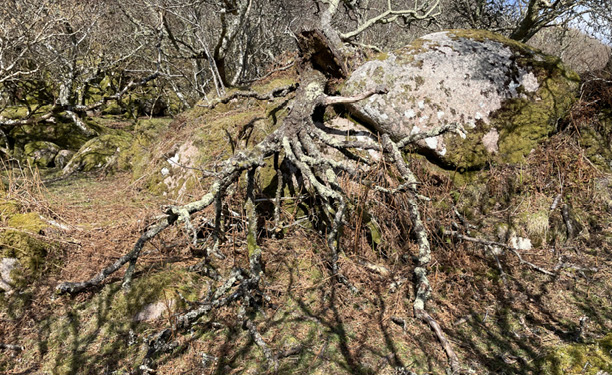
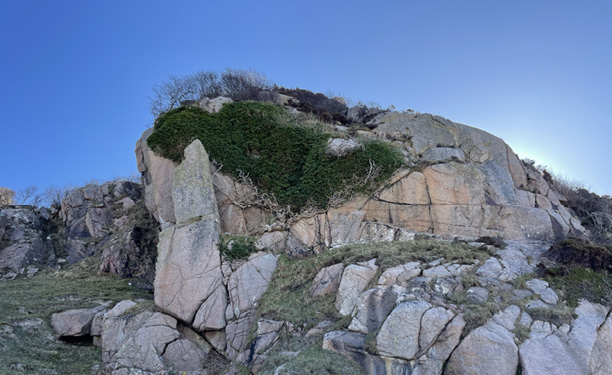
I also saw many examples of plant–stone–animal collaborations and interactions, which can be thought of as assemblages of different spatial and temporal scales. Old stones serve as support for young plants, who may carry berries that feed the birds, who may migrate over long distances.
After I mentioned the tool use of plants to Miek, she sent me the picture below. The small tower sticking out is created by white-tailed eagle excrement that is overgrown, and serves as a vantage point for birds.
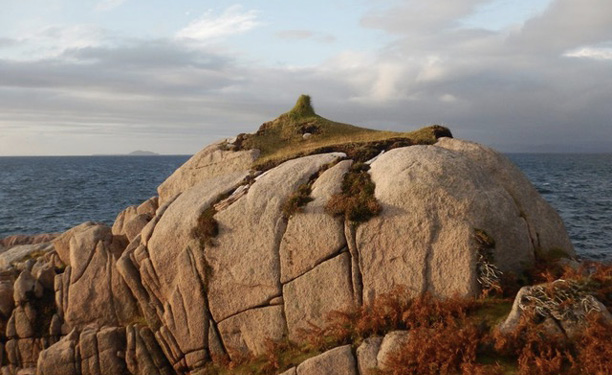
Photo credit: Miek Zwamborn
Large stones are often used as dinner tables by the island’s birds and otters, sometimes for many generations. Humans know which ones they use and also pass this knowledge on to others. Perhaps the stone tables represent an interspecies cultural scale that has a different meaning for different animal communities.
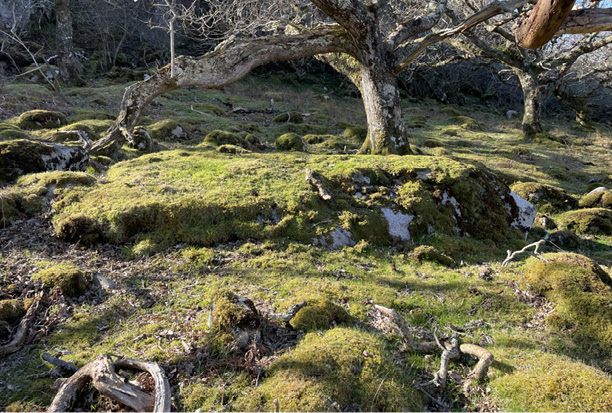
This is a popular dinner table near the beach, used by many coastal birds.
The Scale of Mink Resistance and Human Solidarity
On the third day of my visit, I encountered a mink in front of the studio. The mink who live on Mull are the descendants of animals who have been escaping from fur farms since the 1950s, or were released by activists, and swam to the island. They are labelled as “invasive” by organizations such as The National Parks and Wildlife Service10 and despised by farmers and “nature lovers” because they are predators. Even the SSPCA (Scottish Society for the Prevention of Cruelty to Animals) asks humans to report sightings of them and catch them when they can. However, when mink are caught, they are always killed. The Mink Project on Mull and the neighbouring island of Iona has around fifty volunteers who trap and kill them.11 The SSPCA writes on their website: “Mink are carnivores with a voracious appetite for birds, particularly seabirds, and their eggs, small mammals, fish, amphibians, shellfish and crustaceans. Mink are thought to be to blame for the disappearance of moorhen from Lewis and Harris in the Hebrides”.12 Descriptions like “voracious appetite” and blaming mink for the disappearance of species contributes to a discourse that vilifies them.
This attitude towards mink is problematic in many ways. As Donaldson and Kymlicka write, liminal animals like mink have a right to life, and to a habitat, because they are beings with lives that matter most to them.13 They should also have the right not to be stereotyped, which, as this case shows, can have very violent consequences. It is, moreover, speciesist to blame them for killing other species, while humans on the island kill sheep, deer, chickens, and many others, which they, in contrast to the mink, do not need to do to survive. Furthermore, the presence of mink on the island is the result of human acts. Humans brought them to fur farms in the UK to be exploited and killed, and in light of that cruel history we should be thinking about reparations, not continuing their persecution. Ultimately, the agency of these mink is something to admire and celebrate. Their struggle is a fight for freedom over generations.
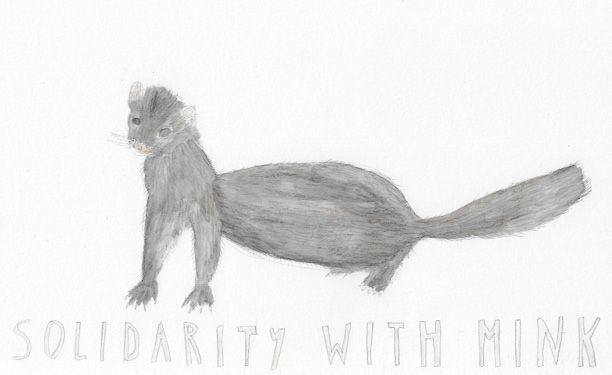
While human genocidal politics concerning mink operate on one scale, mink carve out lives for themselves on another. I caught a glimpse of this when a mink visited the garden and I hereby declare my solidarity with them.
The Scale of Fences
Fences are a crucial human intervention in the landscape of Knockvologan. They can be seen as a spatial form of oppression of nonhuman animals — like sheep, cows, and deer — and as a way of communicating with them. Most fences are a form of what Donaldson and Kymlicka call “uncommoning”; that is, they express the idea that the land belongs to humans and that humans have the right to decide who should be where (fences could also be used beneficially, to close off an area that could be dangerous for nonhuman animals, but I did not see them being used in this way during my visit). Humans enclose the land and claim it as theirs, thereby refusing to acknowledge the right of other “resident groups and peoples to be self-determining within the context of their larger place-based relationship”, which, as Donaldson and Kymlicka write, matters for sharing spaces justly with human and nonhuman beings.14
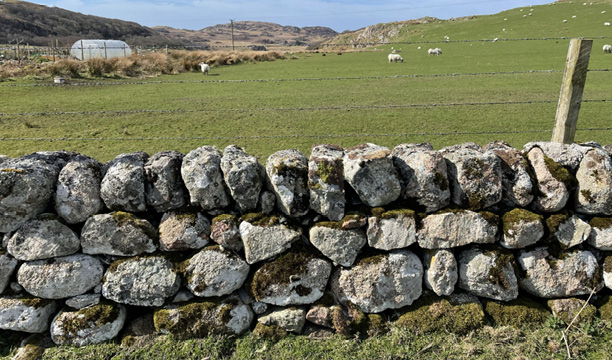
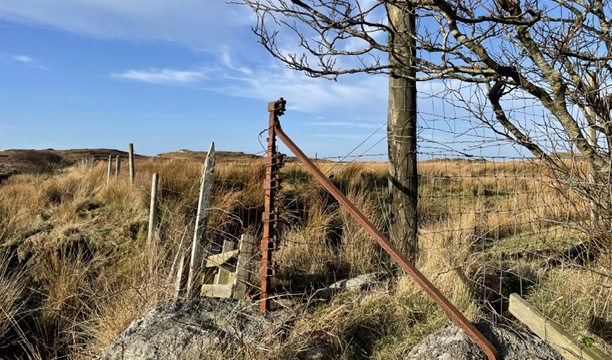
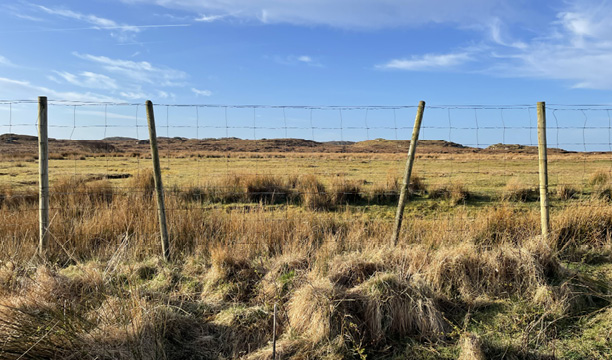
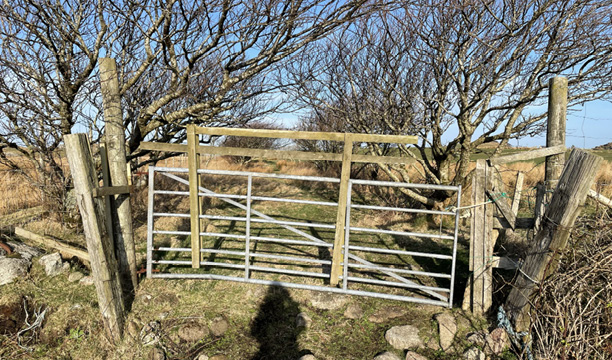
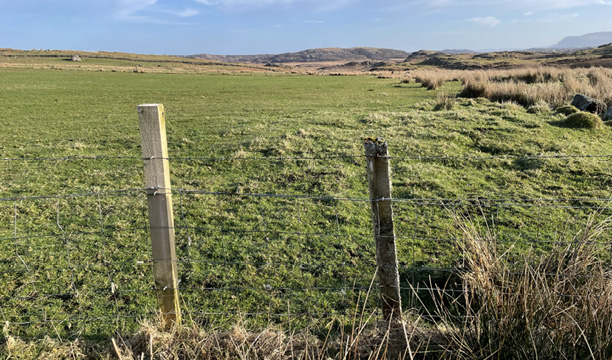
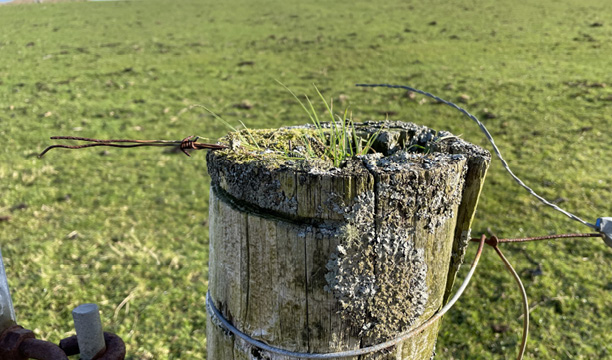
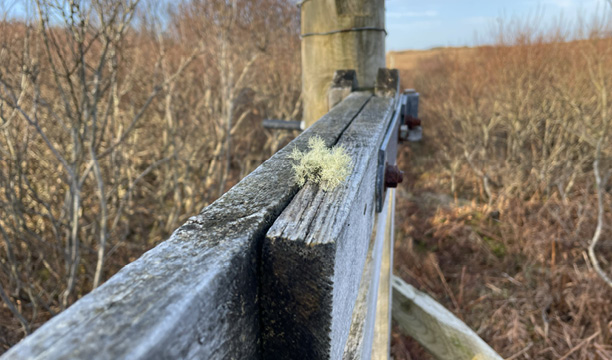
Sometimes plants, mosses, fungi, and lichens use fences to grow on.
Fences connect different scales and forms of scale-making: the scale of human property, of plants growing, of sheep resistance, and of trespassing deer.
The Scale of Trespassing Deer
The deer respect the fences by day but trespass by night. I took the photograph below when I saw them one morning on the field behind my hut, where the heavily pregnant ewes would be brought the next day. This is the “best field” according to the farmer who owns it.
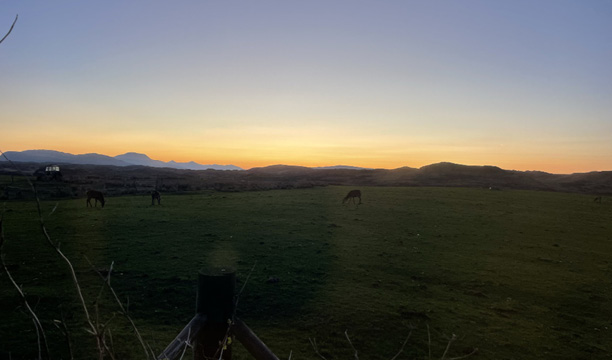
At the end of my visit, I gave a talk about multispecies language and politics. After the talk, the human inhabitants of the island and I had a long and, occasionally, heated discussion about the killing — which humans refer to as “culling” — of the deer who live in Tireragan. Inspired by this discussion, I wrote a poem from a deer’s perspective.
A Good Deer in the Eyes of the Humans
A deer is something to look at.
A deer provokes a feeling of wildness.
A deer belongs to nature.
A deer should not eat vegetables from the garden.
A deer should not trample vegetables in the garden.
A deer should not eat rare plants.
A deer should not trample rare plants.
A deer should not eat plants that are necessary for other plants that humans find special.
A deer should not trample plants that are necessary for other plants that humans find special.
A deer should not be with too many other deer.
A deer is something you keep out with fences.
A deer should not go beyond the areas designated for deer.
A deer belongs in the distance, except when humans want to see a deer.
A deer is anonymous and part of the “deer”.
A deer is something which can be shot if necessary to enforce the above rules, which people do not call murder but culling.
A deer is something whose body you can eat if you have shot it.
A deer is something that may be shot by hunters, humans who experience pleasure when shooting others.
A deer is something that humans call a deer, and see as a representative of a species, not as a friend, family member, or acquaintance of other deer or other beings.
A deer is a good deer if it follows the above rules. The rules are not discussed with the deer but are set and enforced by humans. That is nature.
A Good Deer in the Eyes of the Deer
Correction: In our case, there is no “I” but first “we”. Therefore, I cannot speak about what it means to be a good deer in the singular and the general sense, only about what it means that we are good deer in our place, in the land and in time, which is now and always.
Correction II: You cannot expect us to describe in human language what it means to live as good deer in and with the land. Just as Gaelic has more words for colours and water-grass combinations than English, our language has words for the shades in the textures of the landscape at our feet and fur, our eyes, ears, and nose, the reading of winds and rains, the endless series of variations on together, ranging from smallest-us, through small-us and bigger-us to all-us.
Correction III: The word “good” is too limited for us to do justice to our experience. Among other things, there is run-good, learn-good, play-good, eat-good, we-good, forget-good (which is one of the hardest tasks, especially after a we-loss), weather-good, wind-good, know-good, be-good, here-good, grass-good, sand-good, think-good, decide-good, belong-good, love-good, guard-good (very important in the current political situation), forward-think-good, turn-good, see-good (this refers not only to literal sight but also to the ability to assess a situation), hear-good, mourn-good, trick-good, and wait-good.
Correction IV: We object to the phrasing “eyes of the deer”. We do not think this does justice to the relationships and interweavings of which we are a part. We have beating deer hearts, but these are connected to the other hearts we hear and feel beating. We have lungs through which we breathe air, but they are connected to those who create and keep the air clear for us. Through our eyes, the world flows in and out, and the same applies to the eyes of others (again both the literal and metaphorical eyes — think, for example, of how plants perceive the world). Our “we” does not precede the other “we”; it has always been a part of it.
Correction V, and this is actually a meta-correction: We do not agree with the human tendency to categorize (such as in species, which is often presented as morally neutral, while it is in many ways connected to violence) and therefore, as a matter of principle, we do not wish to cooperate with this survey.
The Scale of Learning to Live More Justly with Others Who Are Like Us
There is a poetic quality to Donaldson and Kymlicka’s “Scale Political”, which has to do with their recognition of the many types of community and forms of politics that exist. This recognition shows the world through a different light. To do justice to all these perspectives, and the needs, rights, and duties of those who are other, we need a twofold movement. Humans need to extend existing institutions, principles, and processes so that they include and recognize the rights of animal others. As Donaldson and Kymlicka show, in this process both Western political philosophy and non-Western forms of theorizing have a role to play. While Donaldson and Kymlicka draw on insights from North American Indigenous philosophy, in the context of Mull, it is Gaelic cosmologies and traditional local practices that might be consulted.15 And, secondly, humans must learn to attend to others more carefully, and experiment with new forms of living with them in order to find out their opinions and views.
In learning to act more justly, philosophical discourse is one way of discussing rights and duties, and forming better multispecies communities. Art is equally important, as the human residents of Knockvologan recognize, and aim to foster. Through spoken and written dialogues, imagining, resembling, and imitating, humans can learn to belong in different ways, and be better neighbours. Nonhuman beings have their own skills when it comes to this.
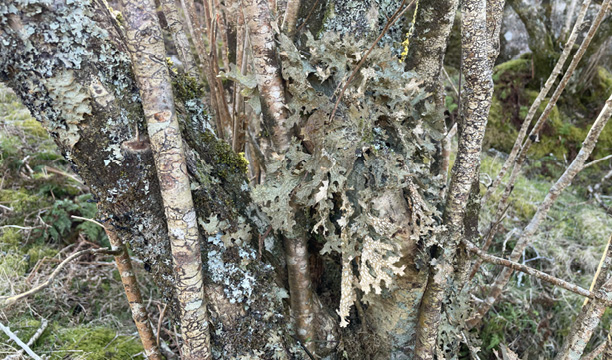
Liverwort imitating leaves.
On my last night in Knockvologan, Miek, Rutger, and I discussed the possibility of human resistance in this era when human democracy and academia are under threat. There is no other way forward than just continuing to create, resist, learn, and listen, we decided, as the other animals have always done against a continuous background of human violence.
This is also hopeful. Humans can learn to better understand the ways of being of others, through paying attention, looking at, and listening. Some of the scales that animal others create and inhabit are easily understood, other scales might remain a mystery, and sometimes we share scales, through practices and in multispecies communities. We also share the land, on a material scale on which we are all connected, and when we are lucky we can find beauty there.
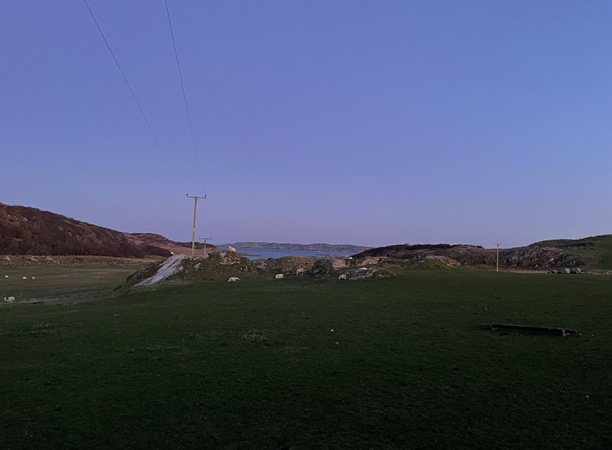
The rams on the field opposite Knockvologan Studio use these stones to watch the sunset and sunrise.
Acknowledgements
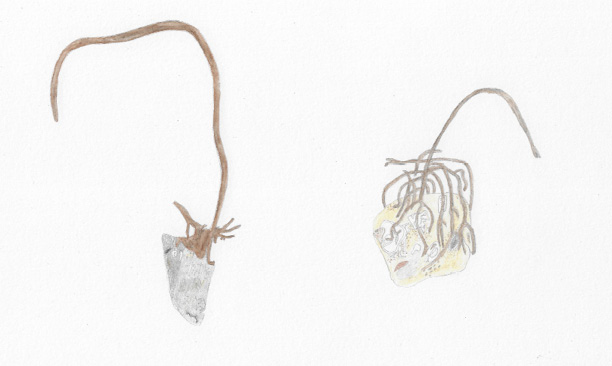
Much thanks to Miek and Rutger for their hospitality, and for sharing their knowledge, ideas, and observations with me. I also want to thank the other humans and the nonhumans of Knockvologan and Erraid for showing me their ways of life, especially Grootmoeder, Haan, and the other chickens at Knockvologan Studio. Thanks to Sue, Will, and Alasdair for the ongoing conversations about animals and politics that have shaped my thinking and writing, and to Mariam and Martin for their work for the lecture series and this special issue.
Notes
Marino and Merskin, “Intelligence, Complexity, and Individuality”, 6.
Despret, “Sheep Do Have Opinions”; Marino and Merskin, “Intelligence, Complexity, and Individuality”, 2–3.
Marino and Merskin, “Intelligence, Complexity, and Individuality”, 6.
Wadiwel, “Do Fish Resist?”
Donaldson and Kymlicka, “Scale Political”, 29–30.
Vinciane Despret makes a similar argument about scientists who study nonhuman animals. See “Sheep Do Have Opinions”.
Schlanger, The Light Eaters, 198.
https://meersoortigcollectief.blogspot.com/2025/04/planten-die-stenen-gebruiken.html
Roy Sugoto, et al., “A Review of Mink Predation and Control for Ireland”, National Parks and Wildlife Service, https://www.npws.ie/sites/default/files/publications/pdf/IWM40.pdf.
“Mink Project”, Mull and Iona Community Trust, https://www.mict.co.uk/conservation-
heritage/mink-project/.“Mink”, Scottish SPCA, https://www.scottishspca.org/advice/mink/.
Donaldson and Kymlicka, Zoopolis, 210–51
Donaldson and Kymlicka, “Scale Political”, 41.
See for example Bateman, “Landscape of the Gaelic Imagination”. Miek and Rutger are currently doing a community project around traditional food practices like fermenting.
Works Cited
Bateman, Meg. “The Landscape of the Gaelic Imagination.” International Journal of Heritage Studies 15, no. 2–3 (2009): 142–52. https://doi.org/10.1080/13527250902890613.
Despret, Vinciane. “Sheep Do Have Opinions.” In Making Things Public: Atmospheres of Democracy, edited by Bruno Latour and Peter Weibel, 360–69. MIT Press, 2005.
Donaldson, Sue, and Will Kymlicka. “Scale Political.” Humanimalia 16, no. 2 (2026): 27–43. http://doi.org/10.52537/humanimalia.28259.
Donaldson, Sue, and Will Kymlicka. Zoopolis: A Political Theory of Animal Rights. Oxford University Press, 2011.
Marino, Lori, and Debra Merskin. “Intelligence, Complexity, and Individuality in Sheep.” Animal Sentience 25, no. 1 (2019): 1–26. https://doi.org/10.51291/2377-7478.1374.
Schlanger, Zoë. The Light Eaters: How the Unseen World of Plant Intelligence offers a New Understanding of Life on Earth. Harper, 2024.
Wadiwel, Dinesh Joseph. “Do Fish Resist?” Cultural Studies Review 22, no. 1 (2016): 196–242. https://doi.org/10.5130/csr.v22i1.4363.