Biblical Wisdom for Contemporary Farms
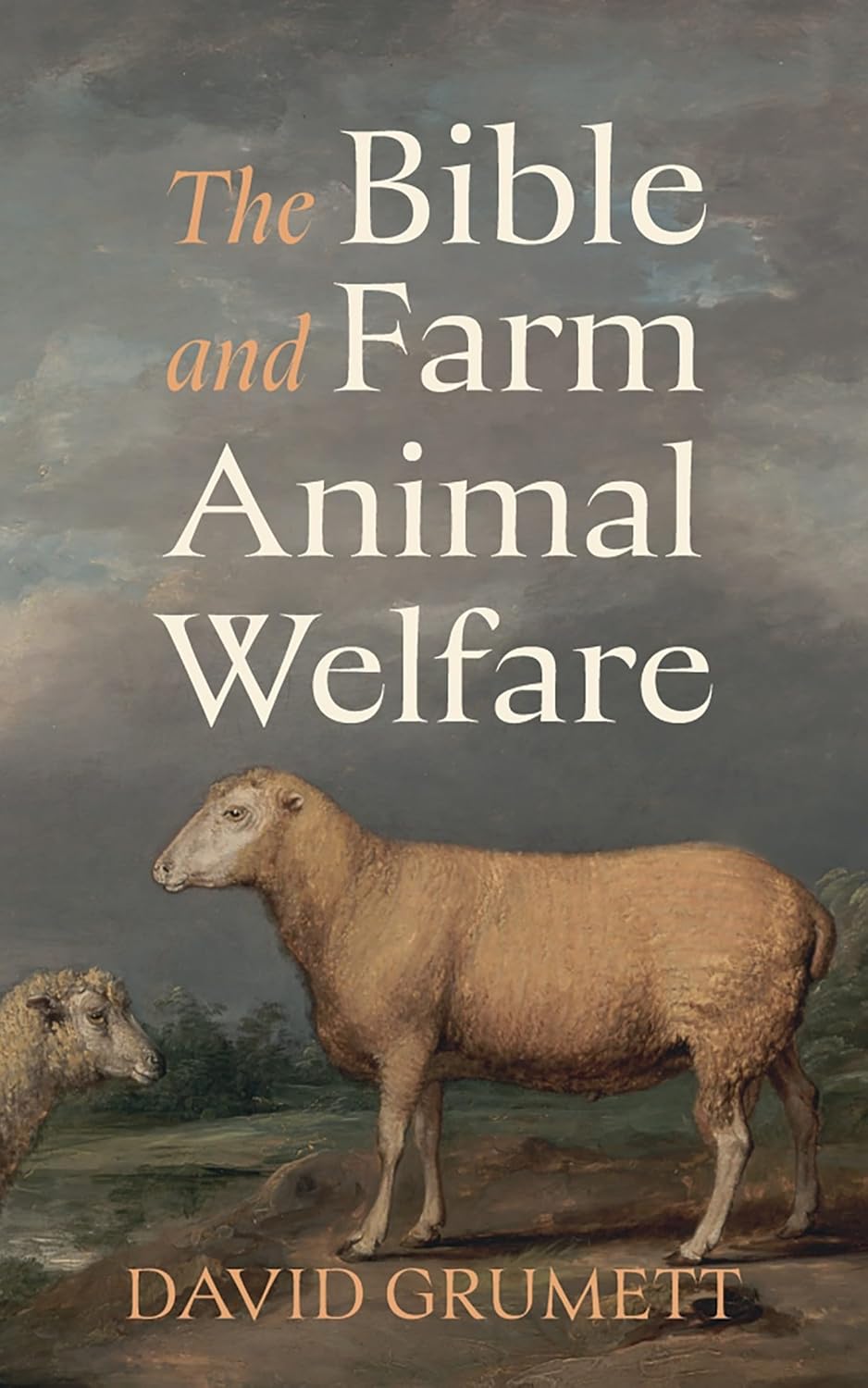
Review of David Grumett, The Bible and Farm Animal Welfare. Eugene, OR: Cascade Books, 2024. x + 113 pp. $19.00 (pb).
Suzanna Millar is a Lecturer in Hebrew Bible / Old Testament at The University of Edinburgh.
Email: suzanna.millar@ed.ac.uk
Humanimalia 16.1 (Winter 2025)
In The Bible and Farm Animal Welfare, David Grumett draws together two worlds that are usually kept apart. He shows that biblical interpretation and animal research can be fruitful (if unlikely) interlocutors, whose conversation has implications for the very real ethical questions surrounding farm animal welfare. Throughout the book, Grumett interweaves different types of evidence and has them speak to one another: texts from the Bible which reflect the agricultural context of their composition; theological interpretations of these texts, especially from Church Fathers (such as Augustine, Ambrose, Basil, and Origen); and details from scientific research studies of farm animals in diverse contemporary contexts. The book is short, clearly written, and accessible to non-specialists, making it an excellent introduction to this fertile cross-disciplinary research area. Despite its biblical and theological focus, it is not apologetic or evangelical; rather, it is intended as a scholarly intervention for all readers regardless of their religious affiliation. The book argues against the view that “Christianity is […] bad news for animals” (2). Instead, it proposes that it is possible to improve contemporary animal welfare “by applying biblical principles informed by modern animal welfare science” (92).
The volume is structured into four main chapters. After the introduction, the first chapter — titled “Herds and Flocks” — persuasively argues that biblical texts and scientific studies can be mutually illuminative in their understanding of animal groups. Grumett draws a parallel between the group identity of farm animals and the collective identity of Christian communities, and suggests that the latter can learn lessons from the former. He begins with sheep. Drawing on animal science, biblical texts, and Patristic writings, Grumett examines the group identity, structure, and tradition exhibited by flocks, suggesting their implications for Christian communities. Drawing, for example, on both a study of Alberta bighorns and the words of Jesus (John 10:16), Grumett describes flocks of sheep — like ideal churches — as welcoming to newcomers. He then examines the group dynamics of other farm animals, an understanding of which is essential to their welfare: cattle (closed and stable herds), chickens (finely graded hierarchies), and pigs (small family-based units).
In the next section of this fascinating chapter, Grumett considers farm animals’ sexual interaction and attachment. He considers sexual behaviour not only between opposite-sex pairs, but also between same-sex pairs. Drawing on multiple studies, he suggests that the latter is prevalent, and is partly socialized and partly biological. (The attention he pays to this point offers a subtle challenge to the homophobic impulse found in some streams of Christianity which objects to same-sex human relations on the grounds that they are not “natural”.) While most farm animals are promiscuous, Grumett also draws attention to greylag geese, which mate monogamously, and which provide for Grumett an exemplar of covenantal love. Finally, Grumett examines birth and infancy. There are birthing phenomena that are considered wondrous both in biblical texts (e.g., Job 39:1–3) and by contemporary animal scientists (e.g., synchronized birthing). In preparation for birth, several farmed species, such as pigs and hens, create nests to protect their young, and during infancy, many species exhibit maternal care — a reality perhaps acknowledged in the Bible through a series of laws which display concern about protecting animals’ mother–child bonds (e.g., Exod 22:30, 23:19, 34:26; Lev 22:27–28). Overall, this chapter compellingly shows how the Bible can prompt readers to learn from, marvel at, and respond ethically to farm animals’ social groups.
Moving from the social to the corporeal, chapter 2, “Bodies”, argues that biblical principles can lead to more ethical physical treatment of farm animals. While, as I explain below, I do have some objections to specific biblical interpretations in this chapter, it offers some very significant insights. An important premise here — which Grumett derives both from biblical texts and from animal welfare science — is that the bodily integrity of farm animals should be preserved whenever possible, and that it should not be compromised for human gain, for example to make farming easier or to create luxury products. Grumett demonstrates this principle by surveying the many biblical texts which prescribe that sacrificial animals must be whole and without defect (e.g., Exod 12:5, 29:1; Lev 1:3, 10; 3:1, 6; etc.). Grumett takes this to imply that the animals must not be castrated. Though several reasons are commonly given why castration is advantageous, Grumett argues that it is not necessary and he rebuts the common arguments. From the genitalia he turns to other body parts, examining sheep tails, animal horns, piglet teeth, pig snouts, and chicken beaks — appendages which are commonly removed or modified during farming. At each stage, he shows the function of the body part and its importance for the animal’s welfare, and suggests that removing it would contravene the biblical principle of animal integrity.
Next, Grumett examines selective breeding practices. The effect of these practices on animal welfare can be positive, such as when the biblical Patriarch Jacob selectively breeds for a stronger, healthier flock (Gen 30:32–31:12). However, they can also be negative; ancient Israelites may have created a fatty delicacy by selectively breeding sheep for larger tails (e.g., 1 Sam 9:24), which harmed the well-being of the sheep by hindering their movement. Finally, Grumett considers animal lifespans. He contrasts biblical texts (e.g., Gen 15:9) and traditional farming practices which allow animals to reach full maturity, with contemporary farming practices which commonly — and unnecessarily — slaughter animals while still juvenile.
In chapter 3, Grumett moves from bodies to “Behavior”, cogently arguing that the Bible provides insights into how we should respond to farm animals’ innate capacities and activities. He starts by considering the habitats and diet of different species. He demonstrates that several biblical texts are attuned to these needs, including the creation stories of Genesis 1–2 in which environments and foods are created for animals, and the laws of Leviticus and Deuteronomy, which classify animals according to these criteria (such as whether they have “cloven hooves” suitable for particular grounds and “chew the cud” for their nutrients). Based on recent scientific studies of farm animals in differing contexts, Grumett outlines the most suitable habitats and optimal diets for various farmed species. He considers divergent feeding practices, depicted in biblical texts and with parallels in contemporary farming. On the one hand, some animals are fattened through stall-feeding, a practice which evidently occurred in ancient Israel and which is censured in some biblical passages (e.g., Amos 6:4). On the other, some animals are allowed to graze freely. In fact, the image of a herbivore ruminating became, for the Church Father Origen, a metaphor for a person meditating on Scripture.
The Bible and the Church Fathers also provide intriguing insights on the next behaviour studied: migration and route-finding. Some biblical texts extol the navigational ability of birds (e.g., Jer 8:7; cf. Gen 8:11; Song 2:12), while Basil of Caesarea and Ambrose of Milan marvel at the seasonal migration of fish, which they suggest depends on a capacity imprinted in them by divine mandate. The innate drive to travel is contravened when such animals are farmed. Species like chickens, trout, and salmon cannot express their navigational capacities in enclosed conditions. The final behaviour which Grumett considers is play. This is vital for the socialization and development of young animals, such as lambs, calves, and piglets. A few biblical texts describe this behaviour — rams and calves skipping (Ps 29:6), wild animals playing (Job 40:20) — and Grumett concludes that the celebration of life that play entails is akin to the animals’ praise of God.
The final chapter turns from farm animals themselves to their keepers — “Stockpersons” — bringing home the very real implications of the animal welfare concerns raised in previous chapters for those who raise and tend to animals. Grumett begins with the (in)famous command in Genesis 1 that humans should “have dominion” over animals (Gen 1:26, 28). This mandate has often been blamed for Christian anthropocentrism, so it is understandable that Grumett gives it considerable attention. He argues that this command functioned to set Israel apart from its neighbouring cultures, where animals were venerated or treated as gods. He further suggests that this “dominion” does not entail cruelty or exploitation, but is modelled after the beneficent rule of God and demonstrated in Israelite ideals of just kingship. Furthermore, this text, with its emphasis on dominion, is offset by other texts which suggest deep relationality between humans and animals. Biblical passages and scientific studies show the mutual benefits of human–animal relations, effected through practices like interspecies cohabitation, communication, and co-working. Due to the tight bond it entails, the farmer–livestock relationship has sometimes been understood as a contract; Grumett takes this further, describing it with the theologically weighty term “covenant”. This suggests an unbreakable and sacred bond, which cannot be violated without serious repercussions. He draws particular attention to the biblical covenant with Noah, which God established with everyone who stepped off the ark, human and animal alike (Gen 9:9–17).
Next, Grumett examines stockperson behaviour and attitudes, which can impact upon animal welfare. He persuasively advocates having empathy with animals (as demonstrated by biblical figures including Jesus himself) and seeing farming as a vocation (as suggested by the theologian Martin Luther). Taking a step further, he considers what it might mean to recognize stockpersons, not as fundamentally above animals, but as animals themselves. He points out that stockpersons sometimes take roles in the group dynamics of their herds that would otherwise be taken by (nonhuman) members of that herd. For example, a stockperson might be treated like a dam by young animals whom they have fed and handled early in their lives. This blurring of the human–animal boundary is also evident in some biblical texts, such as when the Patriarch Jacob dresses his hands with hairy goat skin (Gen 27:11–23) and when Christian ministry is described in animal terms (Matt 23:37; Luke 13:34; John 21:15–16). Of course, the role of the stockperson has changed considerably since biblical times and continues to change today. Accordingly, Grumett ends the chapter by examining technological and other developments that are impacting the profession, some of which may reduce opportunities for interspecies bonding and have negative animal welfare repercussions. The book concludes with a short, valuable epilogue, in which Grumett lays out practical mechanisms for improving animal welfare, including legislation and citizenship, business ethics, consumer choices, and global trade protocols.
I am immensely grateful for Grumett’s book. Animal research is a growing area within biblical studies and theology, and yet few studies in these areas are informed by scientific research or by the lived experiences of real-world animals and their keepers. This volume serves as a welcome corrective and important address to this blind spot. Grumett has extensive expertise in theology and ethics, as well as experience engaging with farmers and animal scientists, and so is well-positioned to make this intervention. Grumett also has knowledge of and draws upon biblical studies. This discipline is not his specialism, though, while it happens to be my own, so I will focus my remaining comments on his use of the Bible.
Let me start with a basic question: what does Grumett mean by “the Bible”? The referent of this term might seem self-evident, but within biblical studies it is a contested and nontrivial issue, which it is important to clarify. Grumett’s Bible is a specific Bible: it is a Christian canon, including the Old Testament (a corpus also scriptural for Jews) and the New Testament. It also includes texts sometimes labelled “deuterocanonical”, that is, those texts considered sacred in Catholic and Orthodox traditions but not in Protestant traditions (specifically, he cites the Prayer of Azariah and 2 Esdras). The most significant texts in Grumett’s Bible seem to be the Pentateuch in the Old Testament and the Gospels in the New, at least judging by how often he discusses them. Furthermore, his Bible is refracted by certain traditions of interpretation, coming through the Church Fathers and Christian history into contemporary Christian theology.
This preliminary matter clarified, how does Grumett use his Bible? Primarily, he draws on biblical texts when they seem relevant for contemporary animal welfare concerns. This is often a fruitful strategy, and Grumett succeeds in showcasing the Bible’s rich resources. Sometimes, though, there is a mismatch, given the significant differences between biblical and modern farming practices. For example, species which are farmed extensively today, and to which Grumett refers frequently — such as pigs and chickens — make only rare appearances in biblical texts. This means that, in some sections of the book, biblical references are lacking, treated cursorily, or inserted where they are only tangentially relevant. In this primary use of the Bible, Grumett treats depictions of animals literally, as representations of real animals, akin to the animals on farms today. Secondarily, though, he sometimes interprets animals as metaphors for the Christian community, often based on the writings of the Church Fathers. Indeed, the opening section in the book’s first chapter is titled “Animals as signs”, which seems to me an odd place to start, given the book’s overarching concern for addressing the lives of actual animals.
Grumett’s overall interpretation of the Bible is positive: it is not “bad news for animals” (2). While he does acknowledge that practices harmful to animal welfare may have occurred in ancient Israel (e.g., the removal of body parts, selective breeding for fat tales, and stall-feeding), he generally suggests that biblical texts oppose such practices in favour of more beneficial ones. As such, he typically finds harmony between biblical texts and modern animal welfare science. Equally, he usually views biblical texts as harmonious with each other, such that he can speak in the singular of “the biblical view of animals” (66) and “the biblical understanding of farm animals” (68). In my view, this risks masking over the moments of, at best, plurality and, at worst, discordance that emerge when the diversity of texts and traditions is considered. For example, Grumett speaks glowingly of the Noahic covenant in Gen 9:9–17 as establishing “a harmonious human–animal relationship” (75). However, this neglects the fact that just a few verses earlier (in Gen 9:2–3) God had pronounced that animals would live in fear and dread of humans, and be given to humans as food. This is a significant inner-textual tension which it is misleading to exclude from the discussion.
Generally, Grumett’s biblical interpretations are competent and insightful. However, the section where I found myself disagreeing with him most often was chapter 2 (“Bodies”). Grumett’s basic observation is correct: multiple biblical texts prescribe that sacrificial livestock must have whole and unblemished bodies. His suggestion that this amounts to a prohibition on animal body modifications (such as castration and tail-docking) may go beyond the evidence, however, for no relevant text mentions these practices explicitly. In the few places where specific bodily abnormalities are mentioned, these are often conditions like blindness and lameness (Deut 15:21; Lev 22:22). Furthermore, the ideology behind these texts is probably concerned not with protecting animal welfare but with protecting the holiness of the sacrificial ritual. Indeed, the parade example of a prohibition on “blemished” animals from being sacrificed (Lev 22:17–25) is paired with a prohibition on “blemished” priests from offering sacrifice (Lev 21:16–24) — a group to whom practices like tail-docking obviously do not apply. The same ideology probably undergirds both: the blemished one “shall not approach the altar, because he has a blemish, that he may not profane [God’s] sanctuaries” (Lev 21:23). This is a far cry from animal welfare concerns. Later in the chapter, Grumett advances other biblical interpretations which may be questionable. His suggestion that Jacob builds fences to separate animals and selectively breeds the strongest specimens seems to go beyond the text (Gen 30:32–31:12); his proposal that Saul eats the fatty tail of a sheep depends upon an emendation of the Hebrew text — from הֶעָלֶיהָ (heʿālêhâ) to הָאַלְיָה (hāʾalyâ) (1 Sam 9:24)1 — and his contention that biblical texts advocate slaughtering older livestock (like the three-year-old animals in Gen 15:9) neglects the many passages where sacrificial animals are specified as yearlings (e.g., Exod 12:5, 29:38; Lev 9:3, 12:6, 14:10, etc.).
Despite these quibbles, I would recommend Grumett’s book to anyone interested in the Bible and animal welfare. It is no easy task to bridge two rich and complex fields in a way that does justice to both and yet remains accessible to non-specialists, and Grumett achieves this admirably. As a short, introductory study, it opens up a rich area for future research and conversation, with real implications for animal welfare.
Notes
It is widely accepted that there are copyist errors in the Hebrew manuscripts of the Old Testament, so it is not uncommon for scholars to emend the text to try and correct these mistakes. Here, the Hebrew literally means “the-upon-it”, likely referring to the fat which is upon the thigh mentioned earlier in the verse. This is accepted by most scholars, but the grammar and interpretation are challenging, so others have proposed emending it to a noun “the fatty tail”. Given that the two words are similar in spelling, it is plausible that a scribe could have accidentally written one instead of the other. However, this emendation is ultimately speculative, and is only supported by a minority of scholars.